By Gustavo de Arístegui,
February 2, 2026
I. BRIEF INTRODUCTION
The events of the past 24 hours confirm a world in “permanent friction mode,” where the combination of open warfare, economic warfare, and internal pressures is silently reshaping the balance of power. While Iran escalates its rhetoric, labeling all European Union militaries as “terrorist groups,” it simultaneously seeks a negotiated solution with Washington, in a dangerously cynical and typically theocratic game. In Asia, Japan prepares for a possible political shift that would reinforce its role as a pillar of the free world against China, while India shields its economy from the trade war with the United States. In the Middle East, Gaza enters a phase of “damage management” with the potential thaw at the Rafah crossing and, above all, with Qatar’s decisive role as a genuine ceasefire mediator, while Doha once again demonstrates that it has made mediation its national hallmark and a cornerstone of its foreign policy, all while remaining one of the most loyal and reliable allies of the United States and the West. Latin America, for its part, is witnessing the tightening of the energy embargo against Cuba under the Trump White House and Costa Rica’s drift toward a right-wing populist shift that will require calm but firm vigilance. All of this is unfolding against a backdrop where commercial and defense aviation is becoming a leading indicator of geopolitical risks and the fragmentation of global trade.
II. MOST IMPORTANT NEWS OF THE LAST 24 HOURS
1. Iran raises the threat of “regional war” and escalates its actions against the European Union
Facts
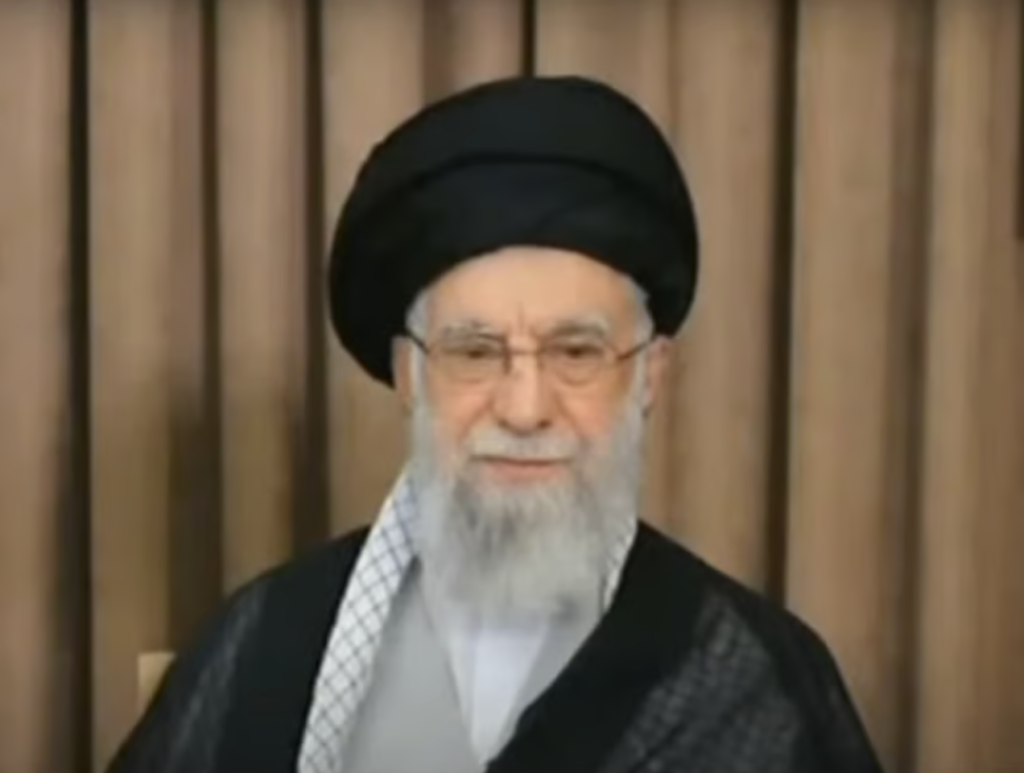
Iran’s Supreme Leader, Ali Khamenei, has publicly warned that any US attack on Iran would trigger a “regional war,” in response to the deployment of significant US naval forces in the region and Donald Trump’s statements that Tehran is “seriously talking” with Washington about its nuclear program. Meanwhile, following the European Union’s decision to add the Islamic Revolutionary Guard Corps (IRGC) to its list of terrorist organizations, Tehran has announced that it considers all EU member states’ militaries to be “terrorist groups.” This rhetoric is accompanied by threats of “swift and forceful” retaliation in the event of military action, while various capitals are reporting indirect contacts to explore a possible channel for negotiation.
Implications
This escalating rhetoric confirms the profoundly destabilizing nature of Tehran’s theocratic regime, which combines strategic victimhood and military blackmail with its traditional export of terrorism through its armed wings: Hezbollah, the Houthis, Iraqi militias, and Hamas. Labeling all European militaries as “terrorists” is not merely a propaganda ploy; it is an attempt to delegitimize NATO and the EU in the eyes of their public and their authoritarian partners, especially Russia and certain actors in Central Asia. Washington’s position, under the Trump presidency, maintains a firm stance consistent with the maximum pressure policy: deterrent deployments, credible threats, and a tactical willingness to explore negotiations if the strategic cost is acceptable to the United States.
Perspectives and scenarios
In the short term, the most plausible risk is a limited shock—an attack against Iranian assets in third countries, or an action by a proxy against US or European interests—that could be managed without escalating into open war, but which would increase tensions in the Gulf and the Levant. In a scenario of strategic prudence, the combination of military pressure and sanctions could push Tehran toward a nuclear containment agreement, provided the regime perceives its economic survival to be at risk. The worst-case scenario would still be a chain of miscalculations: a poorly calibrated attack, a disproportionate response from a proxy, and an escalating dynamic that draws Israel, Saudi Arabia, and the entire eastern Mediterranean into a conflict that would be very difficult to contain.
2. Qatar as a key mediator in the regional de-escalation and the Gaza ceasefire
Facts
Qatar has intensified its diplomatic efforts to reduce tensions between Iran and the West and, simultaneously, has played an absolutely essential role in establishing and maintaining the ceasefire in Gaza, working closely with Egypt, other regional mediators, and the United States. Doha has been a central platform for negotiations on hostage release, the entry of humanitarian aid, and the phased reopening of the Rafah crossing, in coordination with major Western capitals. At the same time, Qatari authorities repeatedly emphasize that mediation and the peaceful resolution of conflicts are integral to Qatar’s national identity and the logic of its foreign policy.
Implications
Qatari mediation is not an opportunistic gesture, but a well-established state policy: Qatar has specialized in speaking with everyone—including actors deeply hostile to the West—to build bridges that no other country could construct with the same effectiveness. This role does not diminish, but rather reinforces, its status as a firm and reliable ally of the United States and Western democracies: the presence of the large Al Udeid airbase and the defense agreements with Washington are tangible proof of this strategic alliance. In Gaza, without Qatar, the ceasefire and the implementation of humanitarian mechanisms would have been infinitely more difficult, if not entirely impossible; its ability to gain the trust of the opposing sides allows it to unblock issues where others only issue statements.
Perspectives and scenarios
In the short term, it is reasonable to anticipate that Qatar will remain the indispensable mediator for both the next phase of the ceasefire in Gaza and any genuine de-escalation between Iran and the United States. In the medium term, if this role is consolidated, Doha could become a structural component of the security architecture of the wider Middle East: a Western partner that, without abandoning its existing alliances, has made mediation its national hallmark and its specific contribution to peace. The challenge for Europe and the entire Atlantic world is to make the most of this asset, integrating Qatar into a strategic design that combines firmness against the region’s authoritarian regimes with the intelligent use of the few intermediaries who can open doors where traditional diplomacy no longer reaches.
3. The European Union enters into the logic of “legal warfare” with Iran
Facts
The European Union’s decision to include the Islamic Revolutionary Guard Corps on its list of terrorist organizations has triggered a reciprocal reaction from Iran, which has declared all member states’ armed forces to be “terrorist.” The European move follows the path laid by the United States and reflects a growing consensus regarding the terrorist nature of the military-ideological apparatus that sustains the Iranian theocracy. Tehran’s response, while legally ineffective outside its territory, elevates the confrontation to the symbolic and political arena, complicating diplomatic and consular channels.
Implications
This dynamic inaugurates a phase of “law warfare” in which terrorism designations are used as instruments of political pressure, but also as a basis for financial sanctions and movement restrictions. For Europe, it finally means abandoning a certain complacency toward a regime that has amply demonstrated its involvement in attacks, the assassinations of opponents, and the financing of terrorist groups in the region. For Iran, the European decision exacerbates its isolation, complicates access to financing, and accelerates the withdrawal of Western companies from its strategic sectors, which could translate into greater internal instability and, potentially, more repression and the outsourcing of violence.
Perspectives and scenarios
In the short term, we will foreseeably see a reciprocal hardening of the stance: more European sectoral sanctions, travel restrictions for Iranian leaders, and potential Iranian responses in cyberspace or through proxies. In the medium term, the real test will be the EU’s internal consistency: whether it maintains this approach over time, coordinates with Washington and London, and strengthens the defense of Iranian dissent, or whether it falls once again into the illusion of “economic openness” with a theocratic dictatorship. In the optimistic scenario, this firmness, well coordinated with the United States, can strengthen the Atlantic front and send a clear message to other authoritarian regimes about the costs of embracing state terrorism.
4. India responds to Trump’s tariffs with an infrastructure and manufacturing offensive
Facts
India’s Finance Minister, Nirmala Sitharaman, has presented a budget that increases capital spending by around 9%, with significant increases in infrastructure, manufacturing, and support for local industry, against a backdrop of 50% US tariffs on certain Indian goods. According to the minister, the budget aims to strengthen resilience to global volatility, boost productivity, and position India as an alternative hub amidst the disruption of global supply chains. The narrative in the Indian press emphasizes that the country is “building strength” to negotiate with Washington from a more advantageous position, without abandoning strategic cooperation.
Implications
The Indian response confirms that a trade war does not necessarily lead to defensive protectionism, but can instead catalyze pro-growth reforms when political leadership prioritizes a market economy and investment in productivity. From an Atlantic perspective, strengthening a democratic India, committed to the rule of law and poised to be a counterweight to China in Asia, is a strategic priority, compatible with tactical trade tensions. The Indian government’s approach contrasts sharply with the victimhood narrative of many Western leftists, who simply blame “neoliberalism” instead of seizing the opportunity presented by the turbulence to modernize their economies.
Perspectives and scenarios
In the best-case scenario, the 2026 budget will accelerate investment in infrastructure and advanced manufacturing, solidifying India as a preferred destination for industrial relocations fleeing China’s opacity and political risk. In the short term, however, the combination of reciprocal tariffs and political pressures could generate friction, requiring sophisticated economic diplomacy from both New Delhi and Washington. If India perseveres with its reforms, it can become a pillar of the liberal Indo-Pacific architecture, provided it maintains its commitment to fundamental freedoms and avoids succumbing to illiberal domestic temptations.
5. Japan: Towards a resounding victory for Takaichi and a clear message to China
Facts
A poll by the Asahi Shimbun newspaper indicates that Prime Minister Sanae Takaichi’s party is headed for a landslide victory in the upcoming elections, with a wide lead over the opposition. The surveys show that Japanese public opinion supports an agenda that combines fiscal responsibility, strengthening national defense, and maintaining the strategic alliance with the United States and other Western partners. This potential election outcome comes at a time of increasing Chinese pressure in the East China Sea and the Western Pacific, as well as intensified regional rearmament.
Implications
A decisive victory for Takaichi would reinforce Japan’s role as the backbone of the containment apparatus against Chinese expansionism in Asia and the Pacific, from the Nansei Islands to cooperation with Australia and India. For Beijing, it would be an unequivocal signal that military intimidation and economic pressure have failed to fracture the Japanese consensus on security. For Europe and the Atlantic world, the message is equally clear: the eastern flank of the liberal democratic system is consolidating, not weakening, which is essential for the stability of trade routes and technology supply chains.
Perspectives and scenarios
If the landslide victory is confirmed, Takaichi will likely have room to deepen defense policy reform, toughen Japan’s stance toward China, and advance security cooperation with Europe, including a European naval presence in the Indo-Pacific. In the medium term, Japan could play an even more active role in integrated deterrence with the United States, from cyber defense to the protection of critical infrastructure. The risk scenario would stem from a potential Chinese overreaction—more air raids, a greater naval presence—which would increase the risk of a tactical incident in an already extremely congested theater.
6. Gaza: Preparations to reopen Rafah and managing an imperfect peace
Facts
Israeli authorities have confirmed that “preliminary preparations” are underway to reopen the Rafah crossing between Egypt and Gaza, with limited pedestrian traffic expected to begin on Monday. Israel has controlled the crossing since May 2014, and the partial reopening coincides with reports of renewed airstrikes that have killed at least 30 people in Gaza, according to Palestinian sources. International media outlets highlight that this is a step in a gradual strategy to ease the blockade, contingent on the security situation and effective control over Hamas and other armed groups, in close coordination with mediation efforts led by Qatar.
Implications
The reopening, although limited, represents an important gesture in the context of a war that has devastated the Gaza Strip and seriously damaged Israel’s international image, despite Hamas’s original responsibility for triggering the conflict. For Egypt, it means once again assuming a pivotal role between Israel’s security demands, pressure from the international community, and the risk of infiltration by jihadist elements. The key will remain ensuring that the opening of Rafah does not become a highway for Hamas’s rearmament, as Hamas continues to be a terrorist organization aligned with Tehran’s regional strategy, while simultaneously preserving the space for mediation and humanitarian aid that Qatar has helped to create.
Perspectives and scenarios
In the short term, a highly controlled reopening can be expected, focused on humanitarian cases, students, and certain work permits, with strong Israeli and Egyptian oversight, and with Doha maintaining a consistent role as guarantor and facilitator. If a stable ceasefire is consolidated, more ambitious reconstruction plans under international supervision could be considered, linking aid to guarantees of effective demilitarization. The risk is that, without a clear political framework for the “day after,” Gaza will be trapped in a limbo of international dependence and security control, a perfect breeding ground for radical Islamism to once again present itself as a false alternative, even despite the serious efforts of mediators such as Qatar and Egypt.
7. South Sudan: Heading into a new, forgotten civil war? Another humanitarian disaster to add to the civil war in “North” Sudan
Facts
Recent reports from the United Nations and specialized organizations warn of a significant escalation of violence in South Sudan, with government military operations against opposition forces and a rise in civilian casualties in areas such as Jonglei State. The UN has expressed its “deep concern” about the rhetoric of some military commanders, who have threatened to “spare no one,” using language reminiscent of the worst moments of the civil war. Various sources underscore the risk of the collapse of the existing peace agreements and the possibility that the conflict will intensify and spread regionally.
Implications
South Sudan embodies the tragedy of fragile states, where the combination of predatory elites, ethnic fragmentation, and an abundance of weapons turns every political dispute into a potential bloodbath. For Europe and the Atlantic world, the risk is twofold: on the one hand, the proliferation of humanitarian crises demanding resources; on the other, the consolidation of spaces of impunity that can be exploited by criminal networks and jihadist groups. International attention remains focused on Ukraine and the Middle East, leaving excessive room for maneuver for local actors who have repeatedly demonstrated their disregard for human life.
Perspectives and scenarios
In the absence of concerted pressure from the Security Council and the African Union, the most likely scenario is a continuation of the violence, with peaks of intensity and large-scale internal displacement. A serious diplomatic effort should combine targeted sanctions against those responsible for serious human rights violations with economic incentives linked to genuine institutional reforms. The risk of regional contagion—in an environment already marked by jihadism in the Sahel and East Africa—demands that South Sudan be placed on the NATO and EU security radar, even if only as a scenario for prevention rather than direct intervention.
8. Aviation: An industry under industrial and geopolitical crosswinds
Facts
Leading figures in the aviation sector, both civil and defense, have warned of a combination of industrial and geopolitical headwinds impacting the market: supply chain bottlenecks, rising material costs, and escalating political tensions that are reshaping routes and purchasing decisions. Meeting at industry forums, executives and managers from airlines and manufacturers have emphasized the need to adapt to an environment where the world’s geopolitical fragmentation is resulting in new restrictions, sanctions, and security risks. Furthermore, the increased demand for military aircraft, drones, and air defense systems linked to conflicts such as the one in Ukraine is altering production priorities in commercial aircraft manufacturing.
Implications
Aviation acts as a leading barometer of global disorder: every conflict alters routes, insurance premiums, costs, and decisions regarding fleets and bases. For Europe, with its major industrial champions in the sector, geopolitical pressure compels it to accelerate industrial autonomy without severing the transatlantic ties that guarantee technological superiority over China and Russia. The surge in military demand, driven by Russian aggression against Ukraine and instability in the Middle East, opens up industrial opportunities but requires strategic planning that prevents the industry from becoming hostage to short-sighted political decisions.
Perspectives and scenarios
In the short term, we can expect increased pressure on delivery deadlines, higher costs, and more contract renegotiations, in both the commercial and military sectors. In the medium term, the map of routes and hubs could be more structurally reconfigured, with greater emphasis on corridors considered politically “safe” and increasing penalties for routes crossing airspace controlled by unpredictable regimes. In the defense arena, the convergence of interests between the United States and Europe regarding arsenal resupply and fleet modernization strengthens the transatlantic alliance and reduces dependence on risky suppliers.
9. United States-Cuba: the energy blockade as the next domino in the chain of populist and bloody communist dictatorships in Latin America
Facts
President Trump has threatened to impose tariffs on any country that sells or supplies oil to Cuba, prompting Mexico to consider suspending its crude oil shipments to the island to avoid economic retaliation from Washington. Various analyses indicate that the Cuban regime is already facing serious difficulties in securing its domestic energy supply, with frequent blackouts and growing social unrest. The US strategy is part of a broader policy of pressure on Latin American dictatorships, following the previous crackdown on the Chavista regime in Venezuela.
Implications
Cutting off the oil tap is emerging as a far more effective tool of pressure than decades of rhetoric and piecemeal sanctions: without energy, the regime’s capacity to maintain its repressive and patronage-based apparatus rapidly erodes. This course of action, politically driven by figures like Senator Marco Rubio, aligns with a clear vision: to strike at the economic pillars that sustain dictatorships that have thrived on exporting repression and “revolutionary” services to the worst forms of Chavismo in the region. The risk, which should not be ignored, is further hardship for the Cuban population, but the ultimate responsibility for this misery remains with a regime that has hijacked popular sovereignty and prevented any democratic transition.
Perspectives and scenarios
In the worst-case scenario, the combination of energy shortages, inflation, and eroding legitimacy could lead to renewed mass protests, the repressive handling of which could, in turn, reignite the international debate on Cuba’s transition. If Mexico and other suppliers yield to tariff threats, Havana will be forced to seek more distant and expensive suppliers or accept even more burdensome political concessions from its authoritarian partners. The best outcome, from a liberal center-right perspective, would be for the energy blockade to accelerate exit negotiations that allow for an orderly transition to a liberal democracy, without revolutionary adventures or summary reprisals.
10. Costa Rica: Advance of the conservative right with Laura Fernández
Facts
Laura Fernández is nearing victory in Costa Rica’s presidential elections, holding a clear lead in the preliminary count, according to international and regional media. Her candidacy, identified as unapologetically conservative, has capitalized on discontent with traditional elites, concerns about insecurity, and frustration with economic management. Initial analyses point to a fragmented Parliament, which will necessitate forming alliances to govern.
Implications
Costa Rica, traditionally presented as a “virtuous exception” in Central America for its political stability, uninterrupted democracy, and commitment to the welfare state, is entering a phase of political experimentation. The label of “right-wing populism” applied by the left and some media outlets necessitates a distinction between rhetoric and substance. If the new government opts for pro-market reforms, fiscal responsibility, and strengthening the rule of law, this shift could be an opportunity to modernize the country and shield it from the contagion of Chavismo and other regional authoritarian temptations. A situation similar to that in Chile exists: electoral rhetoric is one thing, governing is another. The challenges are significant, and it is essential that Laura Fernández maintain a pragmatic and sensible approach, respecting institutions, fiscal responsibility, and keeping her campaign promise to address insecurity. Otherwise, Costa Rica’s well-deserved international prestige could suffer a rapid decline.
Perspectives and scenarios
In the best-case scenario, Fernández surrounds himself with a capable technical team, maintains the Atlantic anchor, and strengthens cooperation with the United States and Europe, especially in security, the fight against drug trafficking, and environmental protection. In the short term, the priority will be observing the composition of his cabinet and his initial economic measures, which will determine whether his project falls within the reformist right or opportunistic populism. For the region, Costa Rica’s evolution will be an important laboratory: success would reinforce the idea of a democratic right capable of responding to social challenges without falling into extremism; failure would fuel the rhetoric of the radical left against any liberal alternative.
III. MEDIA RACK
| Media Outlet / Agency | Main focus in the last 24 hours | Editorial observations |
|—————–|—————————————–|—————————|
| NYT / Washington Post / CNN | Iran-US tensions, Revolutionary Guard designation, and risk of regional escalation. | Emphasis on the risk of war and the need for dialogue; some pieces tend to underscore the dangers of Trump’s response more than the nature of the Iranian regime.
| The Times / The Telegraph / The Guardian | Coverage of Gaza and Rafah, with attention to the human cost and the humanitarian dimension. | Critical approach to Israel on the humanitarian front, with nuances depending on the publication; Hamas’s role is acknowledged but often relegated to the background.
| WSJ / Financial Times / The Economist | Economic impact of tensions with Iran, Indian budget, aviation under pressure, and the situation in South Sudan. | Robust analysis of the effects on markets and supply chains; The Economist raises the issue of a possible new civil war in South Sudan.
| Le Monde / Le Figaro / Libération | European reaction to Iran and internal debate on designating the Revolutionary Guard as terrorists. | Le Figaro tends to emphasize the need for firmness, while Le Monde and Libération focus on the risks of escalation and the impact on the nuclear agreement.
| FAZ / Die Welt / Die Zeit | Emphasis on the strategic dimension of the confrontation with Iran and the role of the EU; mentions of Ukraine and the pressure on European industry. | Generally critical of Tehran and in favor of a more robust European defense policy, in coordination with NATO.
| Corriere della Sera / El Mercurio / Clarín / Reforma | Coverage of Iran and the Middle East, with a regional focus; growing attention to Cuba and Costa Rica. | Latin America is viewed through the lens of the struggle between populisms of different stripes; there is interest in Trump’s role in the encirclement of Cuba.
| BBC / France 24 / Euronews | Balanced narrative on Iran-EU, Qatar’s mediating role, and the reopening of Rafah. | They aim for a descriptive tone, but with particular sensitivity to the humanitarian dimension in Gaza and the risk of escalation in the Gulf; they highlight Qatar as a key mediator.
| Reuters / AP / AFP / DPA | Benchmark coverage of Iran, India, Japan, Gaza, South Sudan, Cuba, and Costa Rica. | They maintain a factual approach that serves as a basis for other media outlets; their reports on the Indian budget, the Costa Rican election, and the pressure on Cuba are particularly noteworthy.
| WION / SCMP / China Daily | Focus on Iran-US tensions, India’s role, and political developments in Japan, as seen from an Asian perspective. | Chinese media tend to portray the United States as a destabilizing factor, while WION emphasizes Indian leadership.
| Gulf and surrounding media (Al Jazeera, Al Arabiya, Qatari and Saudi press) | Qatar and Egypt’s role in the Gaza ceasefire, coordination with the US and EU, and fears of a regional escalation over Iran. | The Qatari press emphasizes Doha’s mediation as a national hallmark; Al Arabiya and other Gulf media outlets acknowledge, with some nuance, Qatar’s effectiveness as a valid interlocutor for Washington and as a stable partner of the West.
IV. RISK TRAFFIC LIGHT
– Red (high and immediate risk)
– Military escalation between the United States/Israel and Iran, with possible involvement of proxies in Lebanon, Syria, Iraq and Yemen, and direct impact on European interests.
– Escalation of the conflict in South Sudan with massacres of civilians and increasing institutional breakdown, in a context of limited international attention.
– Amber (significant risk, but still manageable)
– Reopening of Rafah without a solid framework for the “day after” in Gaza, with the risk of reproducing the cycle of reconstruction-rearmament-new war, despite the mediation efforts of Qatar and other actors.
– A trade war between the United States and India, which could lead to political tensions if not accompanied by smart economic diplomacy.
– Energy pressure on Cuba, with the potential for social unrest and repressive responses that could worsen the humanitarian crisis.
– Green (strategic opportunities)
– A possible landslide victory for Takaichi in Japan would consolidate the security architecture in the Indo-Pacific and send a clear signal to China.
– India’s pro-investment shift, which could strengthen the field of market democracies against the authoritarian Chinese model if the reformist course is maintained.
– Costa Rica’s eventual alignment with a responsible center-right agenda, capable of consolidating the welfare state without falling into impoverishing statism.
– Consolidation of Qatar as a structural mediator and stable ally of the United States and Europe, capable of facilitating ceasefires and partial agreements where others only offer grand speeches.
– Laura Fernández’s victory in Costa Rica and a shift towards balanced and sensible economic and fiscal policies and an all-out fight against drug trafficking and insecurity.
V. EDITORIAL COMMENTARY
What the last 24 hours have revealed is a chessboard where two models clash, starkly and undisguised: that of liberal democracies struggling to adapt to a hostile environment without abandoning their principles, and that of authoritarian regimes combining terrorism, energy blackmail, and legal manipulation to survive. Iran today represents the most blatant version of this second model: a theocracy that threatens “regional war,” declares EU armies terrorist organizations, and simultaneously demands to be treated as a respectable actor on the international stage, all while arming and financing Hezbollah, the Houthis, and Hamas. Faced with this, the response from the United States and Europe must be firm, coordinated, and uncompromising, reinforcing sanctions, protecting dissent, and keeping the door ajar for negotiations only if they serve to reduce the nuclear and terrorist risks, not to legitimize the regime.
Meanwhile, Washington’s hardline policy toward Cuba confirms something many refuse to see: that Latin American dictatorships are vulnerable when their economic lifeblood is attacked, not when they are given symbolic gestures and feel-good speeches. The energy blockade against Havana and the previous blockade of the Chavista mafia regime point to a coherent strategy: cutting off the financial oxygen to those who have turned their countries into platforms for drug trafficking, repression, and ideological export. Here, Europe would do well to abandon its 1960s nostalgia and align itself with an unambiguous defense of liberal democracy, even when the victims of authoritarianism speak Spanish.
In contrast to the authoritarian bloc, there is good news that should not be underestimated. India, with its budget geared toward investment and industry, demonstrates that tariff pressure can be countered with increased market access and productivity, not with retreat and victimhood. Japan, if Takaichi’s victory is confirmed, will consolidate an axis of reason and firmness in the Indo-Pacific, essential for containing Chinese expansionism. Costa Rica, despite the uncertainty surrounding any populist shift, could demonstrate that a right wing that combines security, fiscal responsibility, and institutional respect is capable of offering a real alternative to the region’s Bolivarian tendencies. And Qatar is revealing itself, through actions and not just rhetoric, as a genuine, effective, and committed mediator for peace, having made mediation its national hallmark and a cornerstone of its foreign policy, while remaining one of the most loyal, stable, and reliable allies of the West, and especially the United States.
In this context, Atlanticism is not a nostalgia for the Cold War, but a necessity for democratic survival: only a community of free nations, coordinated and prepared to defend their way of life, can simultaneously confront jihadist terrorism, Russian revisionism, Iranian theocracy, and Beijing’s expansionism. Rejecting extremism of all stripes, denouncing the “Wokism” that trivializes security, and combating the relativism that equates imperfect democracies with unchecked dictatorships are urgent tasks. The emerging world does not allow for moral neutrality: either one stands on the side of liberal democracy, the rule of law, and the open economy, or one leaves the field open to those who conceive of force and fear as the only political language.