By Gustavo de Arístegui, January 21, 2026
I. INTRODUCTION
The events of the last 24 hours condense, almost to the point of caricature, the tensions of this beginning of 2026: a President Trump turning Greenland into a touchstone of power and tariffs, a Europe trying to react without breaking the Atlantic bond, a globalizing peace architecture for Gaza, and an EU seeking to shield, through joint lending, the Ukrainian resistance until 2027.[1][2][3][4] All this is happening while NATO calibrates its military posture in Brussels, markets discount the risk of a new transatlantic trade war, Iran suffers its bloodiest repression since 1979, and China displays 5% growth in 2025, keeping alive the systemic struggle between democracies and autocracies.[5][6][7][8] In Davos, Canadian Prime Minister Mark Carney summed up the climate with an unequivocal message: the rules-based international order is in full collapse, and the central question is whether democracies will be able to respond with mature firmness or will be caught between the unilateralism of their allies and the aggressiveness of their adversaries.[9][10][11]
II. MOST IMPORTANT NEWS OF THE LAST 24 HOURS
1. Trump escalates tensions over Greenland and threatens tariffs on Europe
Facts
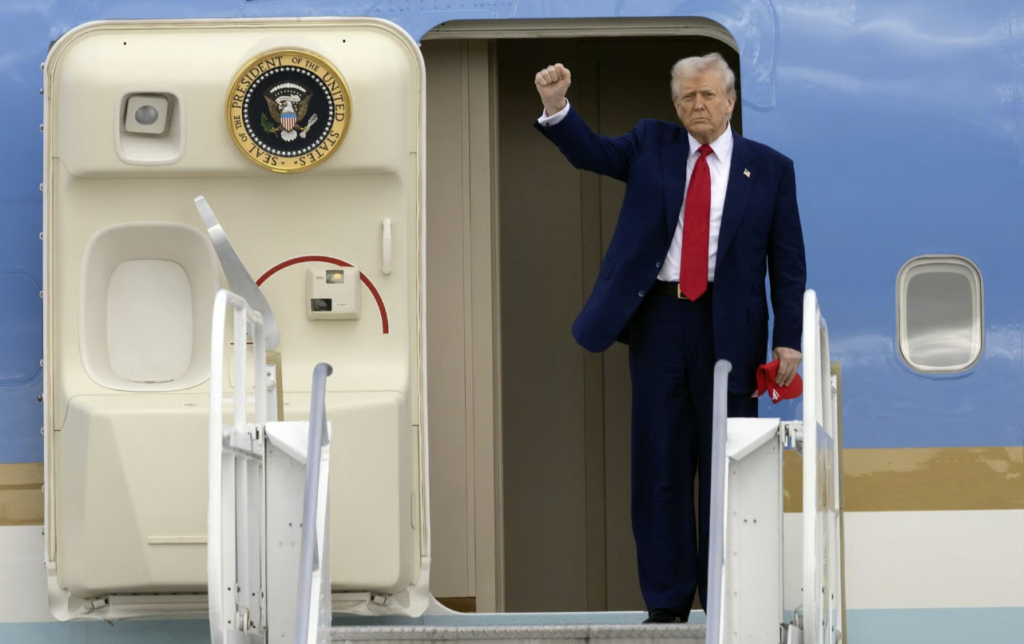
- Donald Trump has reiterated that US control over Greenland is a non-negotiable strategic objective, linking it to missile defense (“Golden Dome”), space surveillance, and containing Russia and China in the Arctic.[12][13][14]
- The president has announced tariffs of 10% on all imports from eight European allies — Denmark, Norway, Sweden, France, Germany, the United Kingdom, the Netherlands and Finland — starting on February 1, escalating to 25% on June 1 if there is no agreement for the “full and complete purchase of Greenland”.[15][16][17]
- In Davos, Emmanuel Macron and Ursula von der Leyen have openly questioned Trump’s ability and warned that the EU is prepared to activate its anti-trade coercion mechanism for the first time in response to tariffs explicitly linked to geopolitical pressures.[18][19][20]
Implications
- Trump effectively breaks with the culture of cooperative alliance management by subordinating trade policy to a geopolitical reward or punishment logic against full partners, and not just against “recalcitrant allies”, re-editing the spirit of the Iraq crisis in an economic arena much more sensitive for European societies.[21][22][23]
- Macron and von der Leyen’s reaction positions Europe as a defender of the rules-based order against a White House that unabashedly embraces a policy of force; our editorial line must be clear: the defense of NATO and the Atlantic alliance cannot be an excuse to accept economic blackmail against allied democracies.
- The systemic risk is not only commercial: if Europeans perceive that Washington is prepared to punish partners for not ceding territories, strategic trust in the American umbrella erodes, fueling anti-Atlantic rhetoric and temptations of misunderstood strategic autonomy that only benefit the Kremlin and Chinese expansionism.[22][23][24]
Perspectives and scenarios
- Positive scenario: concerted pressure from the EU, the NATO Secretary General, and several G7 leaders redirects the conflict towards formulas for a reinforced US presence in the Arctic without altering Danish sovereignty or triggering a tariff escalation; Trump salvages the hardline narrative without crossing the Rubicon.[25][26][27]
- Risk scenario: The president follows through on his threat to impose tariffs on February 1, the EU responds with calibrated countermeasures, and an intra-Western trade war erupts, weakening the common front against Russia, China, and Iran, while Moscow intensifies its disinformation campaign about the “decline” of a divided West.[21][22][24]
- Extreme scenario: The clash over Greenland triggers a toxic debate in some European capitals about the US military presence on the continent; even if this scenario remains a minority one, the mere fact that it is being raised is a strategic triumph for Putin and Xi.[23][24]
2. The EU aims for a political settlement on the €90 billion loan to Ukraine (ECOFIN)
Facts
- EU leaders agreed in December 2025 on a €90 billion loan package for Ukraine in 2026-27, financed through joint debt and conditional on future Russian reparations, backed by the EU budget.[28][29][30]
- The Commission’s legislative proposal translates that agreement into a continuous financial support mechanism to cover Ukrainian budgetary and defense needs from the second quarter of 2026.[28][29][30]
- The ECOFIN meeting on January 20 in Brussels must turn that political agreement into an operational mandate; phrases such as “conclusions adopted” or “mandate to the Commission to implement the joint borrowing mechanism” would indicate a positive outcome, while “reserves recorded” or “deferred for further review” would signal a blockage or delay.
Implications
- For kyiv, the transition from the December agreement to a formal ECOFIN decision is crucial: uncertainty about the timetable and conditionality fuels financial volatility and the Kremlin’s doubts about European resilience in the medium term.[28][29][30]
- The structure of the loan—interest-free and with repayment linked to Russian reparations—is consistent with our editorial line: to hold the aggressor responsible for the bill, to safeguard the internal stability of the EU and to prevent the European taxpayer from being the permanent victim of Putin’s aggression.[29][30]
- An unjustified delay due to vetoes or maneuvers by governments close to the illiberal Central European axis would send a very dangerous signal: that European unity in the face of Russian invasion is negotiable, weakening deterrence and fueling the Kremlin’s narrative of a tired and divided Europe.[29][30]
Perspectives and scenarios
- Positive scenario: ECOFIN adopts clear conclusions, with a mandate to the Commission and passes the package to the implementation phase; markets interpret this as a reduction in liquidity risk in kyiv and a strengthening of the credibility of the European commitment until 2027.[28][29]
- Risk scenario: The language is limited to “substantial progress” but without formal adoption, with references to “additional national consultations”; this implies weeks of delay and rhetorical ammunition for both Moscow and US military aid skeptics.
- Grim scenario: a member state formalizes reservations and reopens the package; the political risk premium on Ukraine skyrockets, the EU’s reputation as a reliable partner in war deteriorates, and naive peace movements that, in practice, whitewash Russian aggression are strengthened.
3. The “Board of Peace” is born: Kazakhstan and Uzbekistan join the design for Gaza
Facts
- Following the announcement of the peace plan for Gaza and the creation of a “Board of Peace” led by the United States, Kazakhstan and Uzbekistan responded by accepting the invitation as founding members, along with other Eurasian and Latin American partners.[31][32][33][34]
- In a letter, Tokayev thanked the White House for the invitation, pledging to support reconstruction, stability and the prevention of further outbreaks of violence in Gaza.[31][32]
- Mirziyoev has stressed that Uzbek participation expresses a commitment to lasting solutions in the Middle East and to an international framework with a global vocation, while the possible integration of Canada and other G7 actors into the governance of the initiative is being discussed.[32][33]
Implications
- The incorporation of Central Asian capital and other non-Western partners makes the “Board of Peace” more than just an ad hoc artifact for Gaza: it is emerging as a platform for multilateral legitimization of Washington’s strategy, with projections to other conflicts where Iran and its proxies play a destabilizing role.[31][32][33]
- For Moscow and Beijing, seeing former Soviet republics align themselves with a Trump-led body is a symbolic setback that erodes the narrative that Central Asia is a Russian-Chinese “protectorate”.[31][32]
- From our perspective, the fact that the post-war design in Gaza is structured around an international body with a non-radical Muslim presence and controlled by democracies or moderate regimes is positive: it weakens Hamas, reduces Iran’s scope and offers an alternative to the Turkey-Qatar-Muslim Brotherhood axis.[31][32][33]
Perspectives and scenarios
- Positive scenario: The “Board of Peace” is consolidated with the accession of more moderate Arab countries, accompanied by a robust reconstruction and security control mechanism that de facto excludes Hamas and limits the power of pro-Iranian militias.
- Risk scenario: Russia and China attempt to infiltrate or create parallel bodies to sabotage Washington’s design, while Iran activates Hezbollah, Iraqi militias and Houthis to increase the cost of any architecture that reduces its influence.
- Deadlock scenario: Internal divisions within the EU or among Arab partners over the division of responsibilities leave the “Board of Peace” in a bureaucratic limbo, repeating the script of previous peace processes.
4. NATO: Meeting of Defense Chiefs in Brussels as a strategic turning point
Facts
- The NATO Military Committee meets on 21-22 January 2026 in Brussels at the level of Chiefs of Staff of the 32 Allies, chaired by Admiral Giuseppe Cavo Dragone, with the participation of SACEUR and SACT.[35]
- The agenda includes sessions on allied military readiness, capacity acceleration, coordination with Indo-Pacific partners and a NATO-Ukraine Council format to review the situation on the ground and support through the NSATU mechanism and the JATEC center.[35]
- A press conference is scheduled for January 22, where language about “operational planning directives” or “tasks to SACEUR to develop options” will be key to distinguishing substantive decisions from mere referrals to the North Atlantic Council.[35]
Implications
- This meeting comes amid a clash over Greenland; if the message coming out of Brussels is one of operational unanimity, a firewall will have been built between the tariff dispute and the deterrence architecture against Russia.[35][23]
- For Ukraine, the implementation of mandates for SACEUR and the strengthening of the NSATU are as important as the financial packages: without superiority in air defense and ammunition, the European millions translate into precarious resistance, not a just victory.
- Any reference to “lack of consensus” or “need for more consultations” will be read in Moscow, Beijing and Tehran as a green light to continue escalating tensions, and in kyiv as a symptom of political fatigue.
Perspectives and scenarios
- Positive scenario: communiqué adopted, explicit support for strengthening the eastern bloc and mandate to SACEUR to update plans, sending Putin the message that, despite the noise, NATO is more cohesive than ever.[35]
- Risk scenario: calculated ambiguities mask divergences on the pace and scope of aid to Ukraine or on Indo-Pacific projection; it is the kind of lukewarm language that historically precedes miscalculations by aggressors.
- Deadlock scenario: political disputes seep into the military level, forcing decisions to be “elevated” to the North Atlantic Council; it would be a worrying precedent in the midst of the standoff with Russia.
5. Davos 2026: Macron, Carney and the EU stand up to Trump
Facts
- At the World Economic Forum, Emmanuel Macron denounced the “law of the strongest” and warned that Europe would not accept the use of tariffs as a weapon to force territorial concessions on Greenland.[18][19][36]
- Ursula von der Leyen recalled the previous commitment not to impose new tariffs and called it a “mistake” to condition trade on acceptance of the US project on Greenland, explicitly mentioning the anti-trade coercion mechanism.[18][19][37]
- Canadian Prime Minister Mark Carney has warned that the rules-based order is “fading” or “breaking down,” and has called on democracies to strengthen their resilience to economic and geopolitical shocks.[9][10][11]
Implications
- This year, Davos becomes the stage for a head-on clash of models: Trump ‘s transactional unilateralism versus a Europe that wants to defend the open economy but still oscillates between appeasement and firmness.[18][19][36]
- Our editorial line demands distinction: one can support Trump’s hardline stance against drug trafficking, terrorism, and Russian aggression without applauding the use of tariffs as a cudgel against democratic allies; the reference is to Reagan-style Atlanticism, not aggressive mercantilism.
- If the EU merely laments without taking action, it will confirm the perception of weakness that Trumpism exploits; if it reacts with intelligent firmness —proportional, legally and politically sound— it can reinforce its role as a pole of reason.
Perspectives and scenarios
- Positive scenario: the verbal storm is redirected in the corridors of Davos towards compromise formulas, perhaps linking reinforced US military presence in the Arctic to additional European investments, without touching Danish sovereignty or triggering tariffs.[25][26][37]
- Risk scenario: the rhetorical escalation translates into tariff reality, and the same elites who today clamor for stability end up trapped in a self-induced trade war.
- Toxic scenario: the European radical left is instrumentalizing the conflict to demand a strategic break with the United States, while far-right sectors are using it to justify opportunistic approaches to Moscow or Beijing.
6. Russia maintains its strategy of terror against Ukrainian infrastructure
Facts
- Russia has resumed massive missile and drone attacks against Ukrainian energy infrastructure, following the pattern of previous waves: dozens of targets focused on power generation, transmission and distribution.[38][39][40]
- The attacks have caused rolling power outages, forced nuclear power plants to operate below capacity, and imposed nationwide blackout schedules.[38][39][40]
- Ukrainian authorities and international organizations have warned of the risk to nuclear security and of Russia’s intention to break civilian morale in the middle of winter, without immediate direct military benefits.[38][39][40]
Implications
- The pattern confirms the terrorist nature of the Russian campaign: it is about punishing the population, not about conquering militarily relevant territory, in line with a regime that despises international law and tries to win in civilian suffering what it cannot achieve on the front.[38][39][40]
- It reinforces the urgency of providing Ukraine with more and better air defense systems and rapid repair capabilities; anything less than that will, in practice, be complicity by omission with Putin’s strategy.
- For Europe, every attack on the Ukrainian network is a reminder of its own vulnerability: pipelines, submarine cables and satellites are all part of a borderless hybrid warfare theater.
Perspectives and scenarios
- Positive scenario: ECOFIN and NATO synchronize financial and military decisions, accelerating the delivery of next-generation air defenses; the cost of each new Russian attack increases to levels politically unsustainable for the Kremlin.[35][28][29]
- The scenario of military aid continues without a qualitative leap and the energy terror campaign is “normalized”, raising the risk of social fatigue in Ukraine and nervousness in some European capitals.
- Black scenario: an attack that evokes a serious incident at a nuclear facility or a prolonged blackout with mass casualties; the world would discover too late that red lines must be drawn before disaster strikes.
7. Syria: fragile ceasefire with Kurdish forces and regime advance
Facts
- The Syrian regime has reached a ceasefire with Kurdish forces following a lightning offensive in the northeast and under pressure from the United States to avoid a total collapse of the SDF, its historical local ally.[41][42]
- The pact foresees a Kurdish withdrawal to Kurdish-majority areas and the gradual reintegration of mixed areas under Damascus control, in an attempt to recentralize power in exchange for minimal guarantees for minorities.
- Washington has presented the agreement as a step towards greater territorial integration, without substantive political changes in the regime of Bashar al-Assad.[41][42]
Implications
- This move consolidates Assad’s survival, supported by Russia and Iran, and leaves the Kurdish militias in a position of fragile dependence; another example of how the West’s local allies pay the price of gradual withdrawals.[41]
- From our perspective, a regime responsible for massive atrocities cannot be whitewashed in exchange for a false stability; without a real political transition, Syria will remain a sanctuary for terrorist and trafficking networks useful to Tehran and Moscow.
- Türkiye will watch any advances by Damascus and its Shiite allies towards the border; the risk of further clashes or the instrumentalization of refugees as a weapon of pressure on Europe remains.
Perspectives and scenarios
- Positive scenario: the ceasefire is consolidated, a minimum of Kurdish autonomy is preserved, and space is opened for an internationally supervised political process, a hypothesis that is currently distant.
- Risk scenario: the regime uses the armistice to divide Kurdish factions, strengthen its security apparatus and open the door to selective repression with low media profile.
- Worse scenario: a new outbreak of violence triggers massive population movements towards Türkiye and, in turn, towards Europe, reactivating the instrumentalization of migration.
8. UK gives green light to a Chinese mega-embassy in London
Facts
- The British government has approved the construction of a large Chinese embassy complex in London, after years of delays and misgivings over security concerns.[42]
- Critics denounce the size of the complex and its proximity to the City as an invitation to espionage and covert political influence.[42]
- The decision comes amid growing tensions between the West and China over critical technologies, strategic raw materials and positions in the Indo-Pacific.[7][42]
Implications
- The decision reveals British ambivalence: tough rhetoric on Beijing, but opening up spaces of physical and symbolic influence to the Chinese regime in the heart of Europe.[42]
- Our editorial line does not advocate closing embassies, but rather preventing them from becoming hubs for intelligence gathering, buying influence, and exerting pressure on diasporas.
- Each advance of Chinese presence in Western capitals adds to a global offensive that stretches from the South China Sea to Africa and Latin America, passing through the most sensitive neighborhoods of London.[7][42]Perspectives and scenarios
- Positive scenario: London accompanies the approval with a serious reinforcement of counterintelligence and strict limits on the use of the complex, sending the message that diplomatic openness does not equate to strategic naiveté.
- Risk scenario: the new enclave becomes a logistical-political platform of an influence network that penetrates institutions, universities and companies.
- Severe scenario: in a future open clash with China, the complex becomes an asset of pressure and hybrid warfare on British territory.
9. US parliamentary diplomacy in Denmark amid Greenland crisis
Facts
- A bipartisan delegation from the US Congress has traveled to Denmark to ease tensions over the Greenland crisis and offer assurances of commitment to Arctic security.[43][44]
- The visit coincided with Trump’s announcement of tariffs linked to the Greenland issue, leaving the parliamentarians in an awkward position with their Danish counterparts.[43][44][45]
- Lawmakers have stressed the importance of defense cooperation and the need to avoid a break with a key ally in NATO’s northern bloc.[43][44]
Implications
- This “dual voice” from Washington—maximalist White House and reassuring Congress—reflects the internal battle between a transactional and a more classical vision of Western leadership.[43][44][45]
- For Europe, the message is clear: not all of America is Trump, but Trump is the president today; the response must be firm without breaking bridges with the Atlantic forces that continue to believe in the alliance.
- Managing the crisis will be a stress test: if the allies fail to manage their differences over Greenland, they will hardly be able to maintain a coherent strategy against Russia, China, or Iran.
Perspectives and scenarios
- Positive scenario: parliamentary work and the work of security bureaucracies compensate for presidential verbal excesses and lead to a tactical understanding with Copenhagen.
- Risk scenario: the gap between the White House and Congress deepens, sending contradictory signals to allies and adversaries.
- Structural scenario: this dynamic becomes normalized and allies are forced to “read Washington” as they previously read factions in politically unstable countries.
10. China and the struggle for the Indo-Pacific: signals from Davos and beyond
- Alongside the Greenland crisis, the EU and India are showing progress towards a free trade agreement, with von der Leyen stressing in Davos that the bloc is “on the verge” of closing a deal, before traveling to India after the forum.[7][28][46]
- The EU-India rapprochement is part of a broader strategy to diversify supply chains and reduce critical dependencies on China, which is maintaining growth of around 5% and accelerating its expansion in Asia, Africa and Latin America.[7][46]
- These diplomatic moves intersect with the consolidation of security alliances and defense agreements between regional democracies and partners such as Japan, the Philippines and Australia.[7][46]
Implications
- For Europe, India is not just a market, but a key strategic partner to balance China’s weight in Asia; every step towards a solid trade pact reduces Beijing’s coercive room for maneuver.[7][46]
- This approach fits with a broader Atlantic vision: the defense of freedom is not only played out in the Baltic or Gibraltar, but also in the Indian, Pacific and South China Seas.
- The big question is whether the EU will be able to maintain consistency between its discourse on “reducing dependencies” and concrete decisions on energy, technology and critical raw materials.[28][46]
Perspectives and scenarios
- Positive scenario: the EU-India agreement is finalized, complemented by discreet security commitments, and becomes one of the cornerstones of the balance against Chinese expansionism.
- Risk scenario: the agreement is diluted in technicalities and sectoral reservations, leaving European dependence on value chains controlled by Beijing almost intact.
- Adverse scenario: India plays at equidistance, using Brussels and Beijing as negotiating levers without a clear alignment on values and security.
III. RISK TRAFFIC LIGHT
- 🔴 Red – High / Imminent Risk
- 🔴 Escalation in the US-EU crisis over Greenland and tariffs. Tariffs of 10% on eight European countries from February 1, with an announced escalation to 25% in June, and the threat of a European trade “bazooka”, open the door to an intra-Western tariff war that would seriously weaken the common front against Russia, China and Iran.[1][2][3][4]
- 🔴 Russian attacks on Ukrainian energy infrastructure. Waves of missiles and drones against the electrical grid, thermal and nuclear facilities cause widespread blackouts, limited operation of power plants and a growing risk of humanitarian and technological catastrophe in the middle of winter.[5][6][7][8]
- 🔴 Mass repression in Iran. The combination of the 2025-26 protests and a crackdown that has resulted in thousands of confirmed deaths, with estimates placing it as the bloodiest since 1979, increases the risk of internal radicalization and regional spillover.[9][10][11][12]
- 🟠 Amber – Medium/manageable risk
- 🟠 ECOFIN and the €90 billion loan to Ukraine. The main danger is delay: reservations from some states and ambiguous language in the conclusions could delay the flow of funds, weakening deterrence against Russia and fueling the narrative of a fatigued Europe.[6][13][14][15]
- 🟠 Fragility of the Gaza “Board of Peace”. Despite the accession of Kazakhstan and Uzbekistan and formal support, the initiative may become trapped between US–Iran rivalries, Arab divisions and Russian–Chinese sabotage maneuvers.[16][17][18][19]
- 🟠 Syria and the reconstitution of the northeast. The ceasefire with the Kurdish forces partially stabilizes the map, but may be a prelude to authoritarian recentralization, selective repression and reactivation of refugee flows and jihadist networks.[20][21][9]
- 🟡 Yellow – Low but increasing risk
- 🟡 NATO internal cohesion. The meeting of defense chiefs and the NATO-Ukraine Council are an opportunity to show unity; any sign of “lack of consensus” on the pace and extent of aid will be exploited by Moscow and perceived in Kyiv as a symptom of political fatigue.[7][8][22]
- 🟡 European ambivalence towards China. The approval of the Chinese mega-embassy in London and the persistent dependence on technology and raw materials maintain a structural risk of influence and coercion that is not yet critical, but grows if it is not accompanied by security counterweights.[23][24][20]
- 🟢 Green – Low risk / strategic opportunity
- 🟢 EU-India agreement and diversification in the Indo-Pacific. Progress towards an EU-India FTA and the development of security networks with regional democracies offers a window to reduce dependence on China and strengthen the axis of democracies in Asia.[24][25][6][23]
- 🟢 NATO defense chiefs’ meeting as a message of cohesion. If it translates into clear mandates for SACEUR and strengthened structural support for Ukraine, it can act as a firewall against the Greenland crisis and as a signal of strategic firmness towards Moscow and Beijing.[8][22][7]
IV. MEDIA RACK
Liberal-progressive mainstream (NYT, Washington Post, Guardian, CNN, BBC, Le Monde, El País, etc.)
Focus on the dangers of Trump and the risk to the rules-based order, with emphasis on Greenland, Davos and the erosion of the transatlantic link.[61][62][63][64] In Ukraine, support for the 90 billion loan, but with a subtext of “fatigue” and medium-term domestic political cost.[56][57][65][66]
Russian/pro-Russian media (RT, TASS and echoes of Russia)
They exploit the transatlantic crisis as evidence of “Western decay” and present the Greenland dispute as American imperial greed and European subservience. [64][67][68] Technocratic minimization of attacks on Ukrainian infrastructure and Iranian repression, wrapped in the narrative of “stability versus chaos”.[38][39][66]
Economic and financial press (FT, WSJ, CNBC, Reuters, Bloomberg, Economic Times, etc.)
It focuses on the impact of tariffs on markets, exposed exporters, and the risk of intra-Western trade war; Davos is read as a thermometer of geoeconomics and risk aversion.[69][70][71] It emphasizes the innovative nature of the 90 billion loan to Ukraine, but warns of vetoes, internal political fragmentation of the EU, and possible delays in implementation.[56][57][66][72]
Continental European media (Le Monde, FAZ, Corriere, La Vanguardia, Brussels Times, etc.)
A tone of alarm regarding the confrontation with the United States, mixing European victimhood with limited self-criticism about its own shortcomings in defense, energy, and strategic autonomy.[57][65][66][73] Broad support for the package for Ukraine and the architecture of the “Board of Peace,” but with insistent cover-up of the reluctance of some member states and social fatigue with the war.[56][57][58][59]
Gulf and Middle Eastern media (Al-Jazeera, Al-Arabiya, Asharq, Israeli and Palestinian press)
A very close look at the “Board of Peace”: a mixture of skepticism and hope in Gaza regarding a scheme perceived as imposed from the outside, with fears that it will not address justice and freedoms.[58][59][74] Israeli press divided between those who see an opportunity to frame Gaza under international supervision and those who fear an internationalization that limits Israel’s freedom of action.[58][74]
Western conservative/center-right media (The Times, Telegraph, Le Figaro, Die Welt, FAZ Opinion, WSJ Opinion, Fox, The National Interest, etc.)
Divided between applauding Trump’s firmness against Russia and China and worrying that tariff coercion against allies erodes the Atlantic alliance.[70][71][75] Greater clarity in denouncing Russian and Chinese expansionism and in supporting the loan to Ukraine as an investment in security, although with debate on fiscal sustainability and burden sharing.[65][66][72][75]
Asian media (South China Morning Post, China Daily, The Times of India, Strait Times, Yomiuri, etc.)
Chinese media emphasize the US-EU conflict as evidence of a divided and unstable West, and downplay the coercive dimension of Beijing.[7][76][77] Indian and Southeast Asian media emphasize the China-West rivalry, the opportunities of the EU-India axis and read the “Board of Peace” as part of a broader rebalancing in the Indo-Pacific.[7][28][46][76]
V. EDITORIAL COMMENT
There are days when the international system seems like a shadow play: noble speeches in Davos, measured statements in Brussels, impeccable press conferences in New York. And yet, behind the rhetoric, what is at stake is painfully concrete: Ukrainian families waking up to the roar of missiles over their power plants, young Iranians risking their lives against a theocracy that exports terror from Beirut to Sana’a, entire peoples—from the Sahel to Central America—poisoned by drug trafficking while some in Europe continue to play at ideological naiveté.[7][38][39][54]
The Greenland crisis, which has become a presidential obsession, is symptomatic of something deeper: when a great power begins to treat its allies as vassals through tariffs, the security architecture begins to crumble; but when those same allies merely complain without strengthening their defense, their political unity, and their strategic capacity, they become complicit in their own irrelevance.[23][45][48] The problem is not that the United States has strategic interests in the Arctic—that is understandable and, if done properly, desirable—but that it seeks to buy or twist the sovereignty of an allied territory as if we were in the 19th century.
At the same time, the game over Ukraine is entering a decisive phase: either Europe converts its grand declarations into money, weapons, and long-term guarantees, or the Ukrainian sacrifice will have been in vain and the message to the tyrants will be devastating: just resist a little and democratic fatigue will do the rest.[28][29][30][38][40] The 90 billion loan is not a gesture of generosity, but an investment in our own security; every missile that is not fired at Kyiv is a missile that is not normalized as an instrument of pressure on Warsaw, Berlin, or Madrid.[38][40][56]
The creation of the “Board of Peace” and the accession of Kazakhstan and Uzbekistan show, for once, something that is often forgotten: when the United States offers orderly and realistic frameworks, its leadership maintains a magnetism that neither Moscow nor Beijing can match.[31][32][33] But that advantage is eroded with every rhetorical excess, every misdirected tariff, every complacent wink to autocrats who understand only the language of force.[23][31][32]
This moment demands more than headlines: it demands a mature Atlanticism, one that wholeheartedly supports the defense of Ukraine, the containment of the terrorist regime in Tehran, and resistance against Chinese expansionism, but that also has the courage to tell
Washington says that friendship between democracies is not built on the basis of trade blackmail.[7][28][40][46] And above all, it demands a Europe that stops behaving as an indignant spectator and starts acting as what it claims to be: a political power capable of defending its values —freedom, the rule of law, human dignity— not only in international forums, but in the harsh test of facts.
Between the whims of the new Caesars and the resignation of the people lies a narrow but indispensable space: that of those who still believe that reason, strength, and decency can change the course of history. That is where we must stand, without hesitation and without fear.
References
- BBC News | Trump says he will ‘100%’ carry out Greenland tari’s threat, as EU…, 2026-01-19
- Bloomberg | EU Tells Trump ‘a Deal Is a Deal’ as Greenland Threats Escalate, 2026‑01‑20
- Yahoo Finance | Trump tari s live updates, 2026‑01‑20
- PwC | US Announces New Tari Measures Amid Greenland Dispute, 2026‑01‑18
- New York Times | Trump Announces New European Tariffs in Greenland Stando, 2026‑01‑17
- Wikipedia | 2025–2026 Iranian protests, 2025‑12‑28
- Business Standard | Latest International News, 2026
- YouTube | “The Old Order Is DEAD”: Mark Carney’s SHOCKING Davos Speech, 2026‑01‑19
- CBC Radio | Mark Carney and the New World Order, 2026‑01‑20
- Economic Times | World order in ‘midst of a rupture’: Canada PM Mark Carney tells Davos, 2026‑01‑20
- YouTube | Mark Carney Davos Speech, 2026-01-19
- BBCNews | Trump Greenland tari s, 2026‑01‑19
- Euronews | Trump to hit eight European countries with 10% tariff over Greenland dispute, 2026-01-16
- Reuters | Trump vows tari s on eight European nations over Greenland, 2026‑01‑17
- CNBC | Trump Greenland tari s: Here are the most exposed exporters Europe, 2026‑01‑19
- YouTube | LIVE: Trump says 8 European countries will face 10% tari, 2026-01-17
- Reddit | Until acquisition of Greenland, US imposes 10% tariffs, rising to 25% in June, 2026-01-17
- Al-Jazeera | ‘A deal is a deal’: EU blasts Trump’s Greenland tari s in Davos, 2026
- AP News | Davos live updates | Macron encourages EU to use measures, 2026-01-20
- Bruegel | How the EU should react to US coercion over Greenland, 2026‑01‑20
- The Conversation | As Trump’s threats over Greenland escalate, will Europe use its trade bazooka, 2026-01-20
- Reuters | Trump’s Greenland tari s exposed exporters, 2026‑01‑19
- Time | Trump Warns There’s ‘No Going Back’ on Greenland, 2026‑01‑19
- Yahoo News | ‘I have a lot of messages for Davos’: Trump doubles down on Greenland and adds new tari threats, 2026-01-20
- DW News | World Economic Forum: Donald Trump set to dominate Davos 2026, 2026
- AP News | Trump’s Greenland threatens spark outrage from EU, 2026‑01‑20
- Euronews | EU holds back trade ‘bazooka’ as it seeks diplomatic solution, 2026-01-17
- European Commission | €90bn loan saves Ukraine funding, 2025-12
- Ministry of Finance Ukraine | Announcement of €90bn loan, 2025-12-18
- ABC News | EU leaders agree on €90 billion euro loan to Ukraine, 2026
- Reuters | Kazakh, Uzbek leaders to join Donald Trump’s ‘Board of Peace’, 2026‑01‑19
- AA.com.tr | Kazakh, Uzbek, Belarusian presidents all get invitations to join Trump’s Board of Peace, 2026-01-18
- Timesca | Uzbekistan Agrees to Join US-Proposed Peace Council on Gaza, 2026-01-19
- Caspian Post | Uzbekistan Responds to Trump, Joins Gaza Peace Council
- NATO | Military Committee in Chiefs of Defense Session, 2026-01-21
- New York Times | Trump News Live Updates, 2026‑01‑20
- Washington Post | With Trump’s eye on Greenland, Davos morphs into, 2026‑01‑20
- Reuters | Russia pounds Ukraine with drones and missiles, 2025-11-13
- CNN | At least three killed as Russia launches largest drone and missile attack, 2025-11-29
- Kyiv Independent | Russia launches largest drone and missile attack in a month, 2026
- Wikipedia | 2025–2026 Syria situation
- YouTube | Greenland, Minnesota, Beckhams and a Chinese embassy, 2026
- NPR | World
- NPR | News
- Time | Trump article on Greenland
- Wikipedia | Portal: Current events January 2026
- BBC | EU weighs response to Trump’s tariff threat over Greenland, 2026-01-18
- Al-Jazeera | Dangerous downward spiral: European leaders slam Trump’s tari threat, 2026‑01‑18
- CNBC | Europe weighs using trade ‘bazooka’ against the US, 2026-01-19
- Euronews | EU holds back trade ‘bazooka’ as it seeks diplomatic solution, 2026-01-18
- Odessa Journal | Ukraine-NATO Council meeting will take place in Brussels, 2026-01-18
- NATO | Military Committee Chiefs of Defense Session, 2025-12-17
- Amnesty International | Deaths and injuries rise amid Iran’s renewed cycle of protests, 2026-01-11
- Iran International | At least 12000 killed in Iran crackdown during internet blackout, 2026-01-12
- Yahoo News | Iran protest movement subsides in face of ‘brutal’ crackdown, 2026-01-16
- EU Parliament | EU Parliament moves to fast-track €90b loan for Ukraine, 2026-01-19
- Brussels Times | EU a airs coverage on Ukraine loan, 2026-01-19
- A | Board of Peace news coverage, 2026-01-18
- Al-Jazeera | Skepticism and hope: Gaza reacts to Trump’s ‘Board of Peace’, 2026-01-16
- Ahram Online | Europe hits back at Trump tari threat over Greenland, 2026‑01‑17
- BBCNews | Trump undermines key allies UK and France ahead of Davos visit, 2026-01-20
- Al-Jazeera | Trump undermines key allies, 2026-01-20
- New York Times | On Greenland, Trump Says ‘You’ll Find Out’ How Far He’, 2026‑01‑20
- ABC News | EU leaders talk coordination over Greenland, 2026-01-19
- New Union Post | EU’s €90bn loan could bring Ukraine closer to EU membership, 2026-01-14
- DW News | EU leaders agree on €90 billion loan to Ukraine, 2025-12-18
- YouTube | EU reveals new details on Ukraine’s €90 billion lifeline, 2026-01-13
- White House | Statement on President Trump’s Comprehensive Plan to End the Gaza Con ict, 2026-01-15
- CNBC TV18 | Davos 2026; Trump’s Greenland tari gambit, 2026-01-18
- Financial Times | Trump Greenland tari s, 2026
- Time Magazine | Trump article coverage, 2026
- EU Agenda | European Commission unveils €90bn loan plan for Ukraine, 2026-01-14
- Caliber.az | Brussels approves €90 billion loan for Ukraine for 2026–2027, 2026-01-13
- Yahoo News | ‘I have a lot of messages for Davos’: Trump coverage, 2026-01-20
- Reuters | Trump’s threats expose Greenland Tariffs and market impact, 2026
- South China Morning Post | Trump and Greenland coverage, 2026
- Strait Times | International news coverage, 2026