Gustavo de Arístegui,
April 29, 2026
I. BRIEF INTRODUCTION
The events of April 28, 2026, brought five major news stories which, taken together, paint a picture of a world in which the pillars of the energy, diplomatic, and strategic order we knew in the 20th century are cracking at an alarming rate. The war waged by the United States and Israel against the Iranian jihadist oligarchy—which I have been describing since its outbreak on February 28 as a “war of variable temperature”: low resolution, high destruction, which no one can win or afford to lose—is generating a chain of seismic consequences that far transcend the theater of operations in the Strait of Hormuz.
The United Arab Emirates leaves OPEC on May 1, ending six decades of membership and dealing a structural blow to the cartel led by Saudi Arabia. Britain’s King Charles III concludes a state visit to Washington that is, at its core, an exercise in diplomatic surgery on the Anglo-American “special relationship”—severely damaged by the frictions between Trump and Keir Starmer’s Labour government. President Trump declares that Iran has “informed” him that it is in a “state of collapse” and urgently desires the opening of the Straits, while rejecting the latest Iranian proposal for not including nuclear guarantees. Meanwhile, a Reuters analysis, supported by multiple Iranian and Pakistani sources, confirms what this analyst has been pointing out for weeks: the Islamic Revolutionary Guard Corps (IRGC) has concentrated effective power in Tehran, reducing Mujtaba Khamenei to a figure of institutional approval rather than a true political leader. The “decapitation paradox”—the situation in which the elimination of the visible heads of the regime does not produce its immediate collapse but rather the accelerated militarization of its command structure—operates with full virulence.
II. MOST IMPORTANT NEWS OF THE LAST 24 HOURS
1. The United Arab Emirates leaves OPEC
Facts
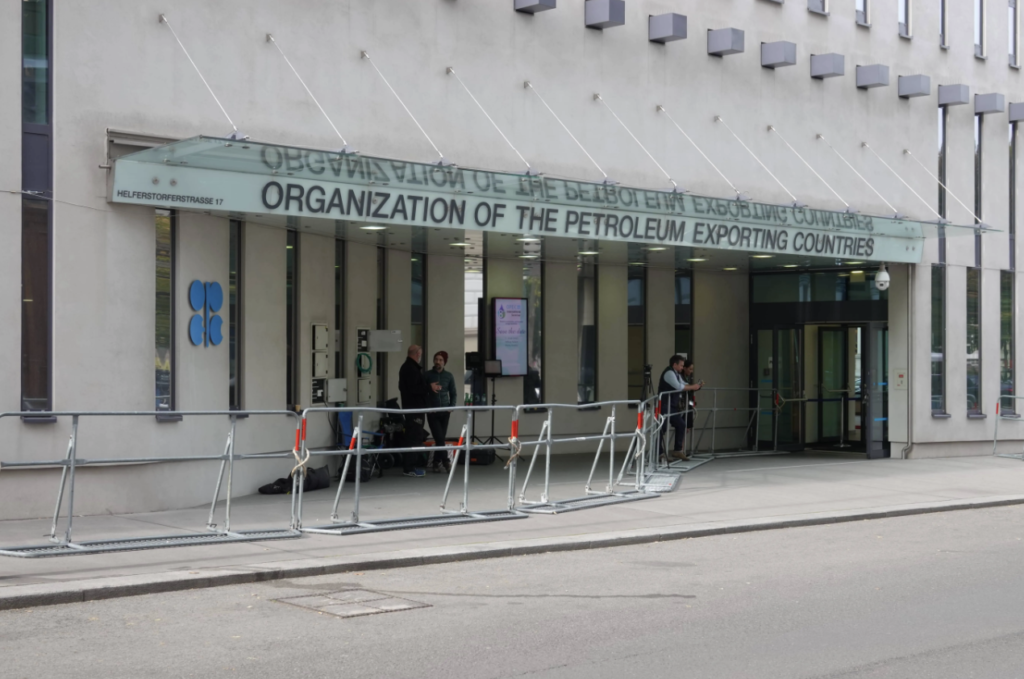
The United Arab Emirates announced on April 28 its withdrawal from the Organization of the Petroleum Exporting Countries (OPEC) and the expanded OPEC+ group, effective May 1, 2026, ending nearly six decades of membership that began in 1967. Emirati Energy Minister Suhail Al Mazrouei described the decision as “a policy-driven evolution, aligned with long-term market fundamentals.” The news was simultaneously confirmed by Reuters, Bloomberg, Al Jazeera, The National, CNBC, and the Khaleej Times.
The UAE was OPEC’s third-largest producer—after Saudi Arabia and Iraq—and has embarked on an ambitious $150 billion investment program through its national company, ADNOC (Abu Dhabi National Oil Company), to reach a capacity of 5 million barrels per day by 2027. OPEC’s production quotas had become a straitjacket incompatible with this expansion strategy. Added to this is the unique geopolitical advantage of the emirate of Fujairah’s coastline, directly overlooking the Gulf of Oman—that is, open waters beyond the Strait of Hormuz—allowing Abu Dhabi to export oil without relying on the passage controlled by Iran. Brent crude surpassed $112 per barrel.
Implications
The UAE’s withdrawal is, politically speaking, a kick in the shins to Saudi Arabia, the cartel’s founding parent and hegemonic power since its inception. Bilateral Emirati-Saudi relations have been deteriorating for months—from the collapse of the coalition in Yemen to growing economic competition—and this decision transforms the rift into a major institutional rupture. As Jorge León, chief analyst at Rystad Energy, points out, Abu Dhabi “will act like any other non-OPEC producer: it will pump as much as it can.” Professor Gianna Bern of the University of Notre Dame warns that if other members follow suit, “there is a real potential for OPEC’s structure to weaken.”
The greatest irony, however, lies in the fact that the immediate impact on the market is minimal: the virtual closure of the Strait of Hormuz—imposed first by the IRGC and then reinforced by the American naval blockade—is keeping regional supply at historically low levels regardless of any cartel’s quotas. OPEC production fell by 27% in March, the largest contraction in decades. What changes with the UAE’s withdrawal is the architecture of global energy power in the medium and long term, not the immediate situation.
Perspectives and scenarios
Scenario A (most likely): Once free navigation through the Strait is restored, the UAE will gradually increase its production to its actual capacity, partially saturating the market and preventing OPEC from maintaining the price discipline of recent years. Saudi Arabia will attempt to force bilateral negotiations but will lack effective leverage. Scenario B: The deterioration of Riyadh-Abu Dhabi relations will precipitate a broader regional crisis that spreads to Kuwait and the smaller Gulf producers, accelerating OPEC’s transformation into a marginal organization with no real price-setting power. The energy balkanization—already predicted by The Economist Intelligence Unit’s analysis—will have begun.
2. State Visit of Charles III: speech before Congress and dinner at the White House
Facts
On April 28, King Charles III of Great Britain delivered a historic address to a joint session of the United States Congress —only the second time a British monarch has done so, after Queen Elizabeth II in 1991—during a four-day state visit to mark the 250th anniversary of American independence. Prime Minister Keir Starmer advised Buckingham Palace on the content of the speech, which was designed to “advance London’s strategic priorities” to Washington. The visit took place in the shadow of the bombing at the White House Correspondents’ Dinner the previous Saturday.
In his address, which lasted approximately 25 minutes and received standing ovations from both parties, Charles III advocated for international cooperation in the face of global challenges, called for “unwavering determination” in supporting the Ukrainian cause, warned against isolationism, and reaffirmed the importance of checks on executive power—implicit references that did not go unnoticed in the House or by the international press. Trump, who watched the speech from the White House because “protocol does not allow” the president to attend, declared that Charles “gave a great speech” and that he was “very jealous.” The day culminated in a state dinner at which the king toasted the friendship between the two nations and the president described the Anglo-American bond as an “eternal strength.”
Implications
The visit is a significant exercise in British soft power. At a time when Trump has repeatedly criticized Starmer’s Labour government for its tepid response to the Iranian conflict and its reluctance to engage militarily, the Crown is acting as a diplomatic bridge that ordinary politics cannot provide. Before Congress, Charles III underscored values—liberal democracy, the rule of law, checks on the executive branch, multilateralism—that clash head-on with several of the Trump administration’s most troubling tendencies, but he did so from the serene authority of an institution that, paradoxically, still commands almost reverential respect in Washington. The Washington Post describes the intervention as a defense of “democratic norms” that avoided naming the president but implicitly implicated him.
Perspectives and scenarios
The ceremonial success does not resolve the underlying tension. The “special relationship” that Charles III came to “repair”—as he himself evoked with the reference to Isabella II’s visit in 1957 after the Suez Crisis—remains strained on the political front: London has not provided military support for the operations against Iran, and Washington has not forgiven this omission. The visit buys time, but it does not resolve the problem.
3. Trump: Iran in a “state of collapse”; plans for a prolonged blockade of the Strait of Hormuz
Facts
President Trump posted on Truth Social that “Iran has informed us that they are in a state of collapse” and that the regime is asking for the Strait of Hormuz to be opened “as soon as possible” while it “tries to resolve its leadership situation.” At the same time, NBC reported that Trump has ordered his advisors to prepare scenarios for a prolonged blockade of the Strait. NBC also revealed that Trump rejected the latest Iranian proposal—which includes opening the Strait in exchange for ending the U.S. naval blockade but indefinitely postpones nuclear negotiations—as unsatisfactory. White House Deputy Press Secretary Olivia Wales stated that “the president will only sign a deal that is good for the American people and the world.”
For his part, German Chancellor Friedrich Merz declared at a student forum in Marsberg that “the Iranians are negotiating very skillfully” and that he didn’t see “what strategic path the Americans are choosing,” adding that the US is being “humiliated” by Tehran. Trump responded vehemently on social media, accusing Merz of believing it’s “okay” for Iran to have a nuclear weapon and stating: “He doesn’t know what he’s talking about. No wonder Germany is doing so badly, economically and in other ways.”
Implications
Trump’s declaration about Iran’s “state of collapse” lacks independent verification and must be interpreted in the context of domestic politics: the president needs to justify to his own voters why the war, launched on February 28 with devastating blows, has not yet produced a decisive victory. His management of expectations is, at best, erratic. The exchange with Merz reveals something more serious: the transatlantic rift is no longer a tactical disagreement but a fundamental strategic divergence on how to deal with Iran, with NATO, and with the multilateral order.
Germany—and with it much of continental Europe—does not share the American view that the Iranian conflict was inevitable or that the method employed was the most prudent. This disconnect has direct military consequences: without the full logistical support of its European allies, the American position in the Gulf rests on a reduced coalition. It is worth remembering here that Spain maintains its Rota and Morón bases operational as logistical assets in this war, a blatant contradiction between military reality and the government’s public discourse, which borders on irresponsibility.
Perspectives and scenarios
If the Iranian proposal fails to break the deadlock in the coming days—Pakistani mediators are awaiting a revised Iranian proposal—the most likely scenario is an indefinite extension of the “dual blockade,” with devastating energy consequences for Asia and Africa. Brent crude at $112 is not the peak: if the impasse persists, analysts at Rystad Energy and the IISS project levels above $130-$140, with energy rationing across large areas of South Asia and Sub-Saharan Africa.
4. The IRGC assumes war power; Mokhtaba Khamenei, figurehead
Facts
A comprehensive analysis published by Reuters on April 28, supported by Pakistani and Iranian sources and the Institute for the Study of War (ISW, Washington), confirms that the Islamic Revolutionary Guard Corps (IRGC) has consolidated effective control of the Iranian state, relegating the new Supreme Leader, Mukhta Khamenei, to a role of formal legitimization rather than genuine political leadership. Khamenei, seriously wounded in the first Israeli-American attack that killed his father and other family members, has not appeared in public and communicates through IRGC delegates or via restricted audio links for security reasons.
The real power lies with the triumvirate this analyst has been describing since early April: General Ahmad Vahidi (commander-in-chief of the IRGC), Mohammed Baguer Zolghadr (secretary of the Supreme National Security Council, or CSSN, and head of the Quds Force), and General Rezaei, acting military advisor to the Supreme Leader. Reformist President Masoud Pezeshkian is systematically sidelined from key decisions. The Speaker of Parliament, Mohammed Baguer Ghalibaf—former commander of the IRGC Air Force, former mayor of Tehran, and former presidential candidate—is involved in negotiations with Washington but answers to Vahidi, not Pezeshkian. A senior Pakistani official involved in the negotiations stated that “the Iranians are painfully slow to respond. There is apparently no single, decisive command structure. Sometimes it takes them two or three days to reply.”
Implications
This analysis confirms and deepens the “decapitation paradox”—a term I have been using to describe the situation in which the removal of the regime’s top figures does not produce its immediate implosion but rather the accelerated militarization of its power structure. Far from collapsing, the jihadist oligarchy has hardened. The IRGC, which in practice was never an enforcement arm subservient to clerical leadership but rather a state within a state, has found in war the perfect pretext for open hegemony. The dividing line between the IRGC’s institutional interests—preserving the nuclear program, maintaining control over the Strait as leverage in negotiations, and perpetuating the networks of outright corruption that sustain the regime—and a hypothetical strategic rationality that would accept a negotiated solution is now wider than ever.
Iranian analyst Arash Azizi, quoted in the Reuters analysis, succinctly summarizes the dilemma: “Major agreements will likely go through Mojtaba, but I can’t imagine him imposing his will on the National Security Council. How can he go against those who are directing the war effort?” Alan Eyre, a former American diplomat and Iran expert, concludes that “neither side wants to negotiate” and that any flexibility would be interpreted as weakness by both sides.
Perspectives and scenarios
The consolidation of the IRGC’s power structurally reinforces Iran’s negotiating position. The triumvirate will not yield on the nuclear program, which constitutes its long-term survival policy; and it will not open the Strait without concessions that Washington is currently unable to offer—lifting the naval blockade and guarantees of no further attack. The impasse is not merely circumstantial: it is structural. Without a plan for the “day after”—which the Trump administration unfortunately lacks—the “contained systemic fracture” could become uncontrollable.
5. Trump rejects latest Iranian proposal; negotiations at a standstill
Facts
The New York Times and CBS News reported on April 28, citing multiple anonymous sources close to the White House, that President Trump rejected the latest Iranian proposal conveyed through Pakistani mediators. The proposal called for opening the Strait of Hormuz in exchange for lifting the U.S. naval blockade, but indefinitely postponed negotiations on the nuclear program. Trump reportedly told his advisors that he was “not satisfied” with the terms. Pakistani mediators are expecting a revised Iranian proposal in the coming days, although Jared Kushner and Special Envoy Steve Witkoff’s trip to Islamabad was canceled on April 25. The Panama Canal is experiencing a surge in traffic, from 34 to 50 ships per day, a direct indication of the massive rerouting caused by the closure of the Strait of Hormuz.
Bahrain convened a high-level session at the United Nations to demand the opening of the Strait. Most countries supported the call; Russia and China blamed the American blockade and Israeli attacks. The US Central Command (CENTCOM) reported that 39 ships have been rerouted since the blockade began on April 13.
Implications
Trump’s refusal to accept a proposal that would separate the Strait issue from the nuclear issue reflects a strategic decision with its own internal coherence—the Iranian nuclear program is, in its conception, the central threat that justified the war—but one that ignores operational reality: the IRGC will not negotiate its existential insurance policy under active military pressure. The consequence is an “architectural stalemate” that this analyst characterizes as a “contained systemic fracture”: there is neither total war nor peace; only a state of continuous and cumulative damage to the global economy, to the affected populations, and to Washington’s credibility as a power that acts with a plan and not just with force.
The biggest paradox is that Trump knows he needs a diplomatic success before the midterm elections, but the conditions he’s imposing make that success virtually impossible in the short term. Foreign Minister Merz was right in his diagnosis—the lack of American strategy is evident—even if his formulation was politically clumsy in the context of the British royal visit.
Perspectives and scenarios
Most likely scenario (estimated probability: 45%): prolonged impasse, with the Strait operating at minimal capacity for several more weeks and Brent crude consolidating above $115-120. Scenario B (30%): limited interim agreement—partial and supervised opening of the Strait, nuclear postponement—that Trump can sell as a victory without compromising his red lines. Scenario C (15%): breakdown of the ceasefire and resumption of military operations. Scenario D (10%): implosion of the Iranian regime due to internal economic collapse, without a formal agreement.
III. MEDIA RACK
| HALF | EDITORIAL LINE / EMPHASIS |
|---|---|
| Reuters / AFP / AP | Detailed coverage of the UAE’s withdrawal from OPEC; analysis of the IRGC’s (Islamic Revolutionary Guard Corps) influence on Iranian decision-making; update on the diplomatic impasse in the Strait. |
| The New York Times/Washington Post | Emphasis on Trump’s rejection of the Iranian proposal; profile of the post-Khamenei IRGC power structure; extensive coverage of the State Visit of Charles III. |
| BBC / The Guardian / The Times (London) | The British press highlights Charles III’s speech to Congress as an act of restoring the “special relationship.” The Guardian emphasizes the King’s implicit allusion to the limits of executive power. |
| Financial Times / The Economist / Bloomberg | Economic analysis of the UAE’s withdrawal from OPEC; impact on oil futures markets (Brent > $112); study of the restructuring of energy routes to the Panama Canal. |
| Wall Street Journal/CNBC/Fox News | Coverage favorable to Trump’s hardline stance against Tehran; the WSJ reports on US Navy destroyers entering the Strait for the first time since the start of the war. |
| Le Monde / Le Figaro / France Info / BFM | French media highlight Merz’s position and European criticism of the lack of American strategy; they debate the impact of the Strait blockade on European energy prices. |
| FAZ / Die Welt / Die Zeit | German newspapers magnify the Trump-Merz clash; analysis of the German industry’s exposure to the energy shock resulting from the closure of Hormuz. |
| Al Jazeera / Al Arabiya / Asharq Al-Awsat | A view from the Persian Gulf: veiled applause for the UAE’s decision to break with OPEC; they point to the deterioration of Abu Dhabi-Riyadh relations. Al Jazeera criticizes the American embargo as an aggravating factor. |
| TASS / Russia Today | Moscow and Beijing are portrayed as defenders of Iran’s right to close the Strait; the American blockade is described as “imperialist aggression.” Low-intensity propaganda, but a consistent message. |
| Times of India / Hindustan Times / WION | India on high alert due to energy restrictions; the first LNG shipment since the start of the war crosses the Strait aboard the Japanese ship Idemitsu Maru. |
| South China Morning Post/China Daily | Beijing is watching with increasing attention; the UAE’s departure from OPEC is seen as an opportunity to strengthen bilateral agreements with Abu Dhabi outside the cartel. |
| Yomiuri Shimbun / Japan Times | The passage of the Idemitsu Maru through the Strait “with Iranian coordination” is front-page news. Tokyo is exploring cargo insurance options in areas of extreme risk. |
| RUSI / IISS / CSIS / Foreign Affairs | Anglo-Saxon think tanks publish critical analyses on the lack of American planning for the “day after”; the IISS warns that the IRGC will not negotiate denuclearization from a position of weakness. |
IV. RISK TRAFFIC LIGHT
| ● | ZONE / SUBJECT | LEVEL |
|---|---|---|
| ● | US-IRAN CONFLICT (Operation Epic Fury) | RED |
| ● | STRAIT OF HORMOUZ — Dual lock / navigation closure | RED |
| ● | GLOBAL ENERGY MARKETS (Brent > $112/barrel) | RED |
| ● | OPEC — Structural crisis due to UAE withdrawal | ORANGE |
| ● | LEBANON / HEZBOLAH — Fragile ceasefire under Israeli pressure | ORANGE |
| ● | SPECIAL RELATIONSHIP BETWEEN THE U.S. AND THE UK — State Visit of Charles III | YELLOW |
| ● | Iran-U.S. negotiations (Pakistani mediation, impasse) | ORANGE |
| ● | UKRAINE — Active conflict; tense Western support | ORANGE |
| ● | IRAN REGIME — Power fragmentation / leadership vacuum | RED |
| ● | US-EUROPE TENSIONS (Merz vs. Trump; NATO discord) | YELLOW |
V. EDITORIAL COMMENTARY
There are days when events seem to unfold with dramatic flair, as if history had decided, in twenty-four hours, to reveal the blueprint of the architecture it has been silently constructing for months. April 28, 2026, is one of those days.
The UAE’s withdrawal from OPEC is much more than an energy decision: it is a declaration of geopolitical independence by Abu Dhabi from the regional order led by Saudi Arabia. For decades, Gulf cohesion was presented by apologists for the status quo as one of the pillars of global energy stability. That pillar has just cracked publicly, at the most inopportune moment—when the Strait of Hormuz remains under a double blockade and the price of a barrel is nearing $115. The timing is not accidental: the war against the jihadist oligarchy in Tehran has created the perfect context for the UAE, which has been flouting the production quotas imposed by Riyadh for years, to take the plunge. Abu Dhabi has its own access route to the sea outside the Strait—Fujairah opens directly onto the Gulf of Oman—, has the technical capacity to pump five million barrels per day, and has the political will to stop paying the price for a cartelized solidarity that never protected it from Iranian missiles. OPEC emerges from this crisis structurally weakened.
Charles III’s visit to Washington is, in form, an act of first-rate monarchical elegance; in substance, an implicit acknowledgment that the Anglo-American “special relationship” has entered a turbulent zone that no Labour prime minister can dispel. The king did what he could: invoke shared history, advocate for shared values—liberal democracy, checks and balances on executive power, multilateralism, Ukraine—from the distance afforded by the crown, without mentioning Trump by name but still addressing him in the background of every paragraph. Congress applauded. The president said he was “jealous.” The rift between the continent and Washington, however, remains wide open.
The exchange between Trump and Merz deserves closer analysis because it reveals something that politically correct diplomacy rarely admits: Europe and America no longer see the same strategic map. Merz didn’t say it was acceptable for Iran to have a nuclear weapon—Trump’s interpretation is either a deliberate misrepresentation or an unacceptable misunderstanding for a sitting president—he said that the lack of American strategy makes a dignified exit for Washington impossible. And in that, whether one likes it or not, the German Chancellor is right. A power that starts a war without a plan for the aftermath is not a strategic power: it is a tactical power with strategic ambitions, which is infinitely more dangerous.
The analysis of the IRGC’s seizure of power confirms what this analyst has been accurately describing since the beginning of the conflict: the “decapitation paradox” is not a flaw in the American diagnosis, but rather the predictable result of decades of confusion between the regime and the Iranian people. The visible clerical leadership can be destroyed; the militia, ideological, economic, and criminal structure that the IRGC has built over forty-five years cannot be dismantled in one fell swoop. General Vahidi is not Khamenei’s successor: he is the natural heir to a system that was never a theocracy—as so many superficial analysts repeat—but rather a jihadist and mafia-like oligarchy cloaked in religious garb. The difference is not semantic: it is analytically crucial. Theocracies have a logic of legitimacy that can erode; military mafias do not.
I conclude with a compelling reflection: the Strait of Hormuz crisis has transformed from a regional conflict into the biggest energy and geopolitical shock of this century so far. Its consequences—energy rationing in Asia and Africa, a reshuffling of the OPEC system, a weakening of NATO, a breakdown of transatlantic coherence, and the paradoxical strengthening of the IRGC—will accumulate for years. And in this entire scenario, Spain—with Rota and Morón operating as frontline logistical assets—maintains a public discourse of neutrality that can only be described as strategic schizophrenia. I’m not asking for maximalism. I’m asking for consistency.