Gustavo de Arístegui,
April 30, 2026
I. BRIEF INTRODUCTION
This analyst has been warning for weeks that “Operation Epic Fury” has entered a phase of dangerous strategic uncertainty. The events of April 29 and 30, 2026, brutally illustrate this diagnosis: the Pentagon has revealed that the conflict has already cost the American taxpayer $25 billion without a plan for the aftermath, an end date, or a coherent strategy to transform the military victory—undeniable on almost every front—into a lasting political solution. Meanwhile, the Strait of Hormuz remains under the extortionate control of the guardians of the terrorist regime in Tehran, with Brent crude hovering around $118 a barrel and the world’s economies absorbing the impact.
On the Eastern European front, Russia’s war against Ukraine is escalating deliberately and ruthlessly: new Ukrainian drone attacks on the port of Odesa in response to Russian attacks on civilian targets, including a destroyed hospital. Putin is offering symbolic truces tied to Victory Day on May 9—unilateral truces, not negotiated with Kyiv—while simultaneously increasing pressure on the ground.
Trump, for his part, is stirring up the geopolitical landscape by announcing the possibility of reducing the American military presence in Germany at a time of maximum Atlantic fragility, and the European allies—incapable, as this analyst has been denouncing for years, of taking their own defense seriously—are watching with a mixture of perplexity and paralysis. The Taiwan issue is also a hotbed of activity: just weeks before the Xi-Trump summit, the debate over the island’s political status has resurfaced with renewed force. And from the American continent, the indictment of the governor of Sinaloa confirms what many of us already knew: in Mexico, the narco-state has penetrated even the highest levels of state executive power.
II. MOST IMPORTANT NEWS OF THE LAST 24 HOURS
1. The war with Iran has cost $25 billion: Hegseth testifies before Congress
Facts
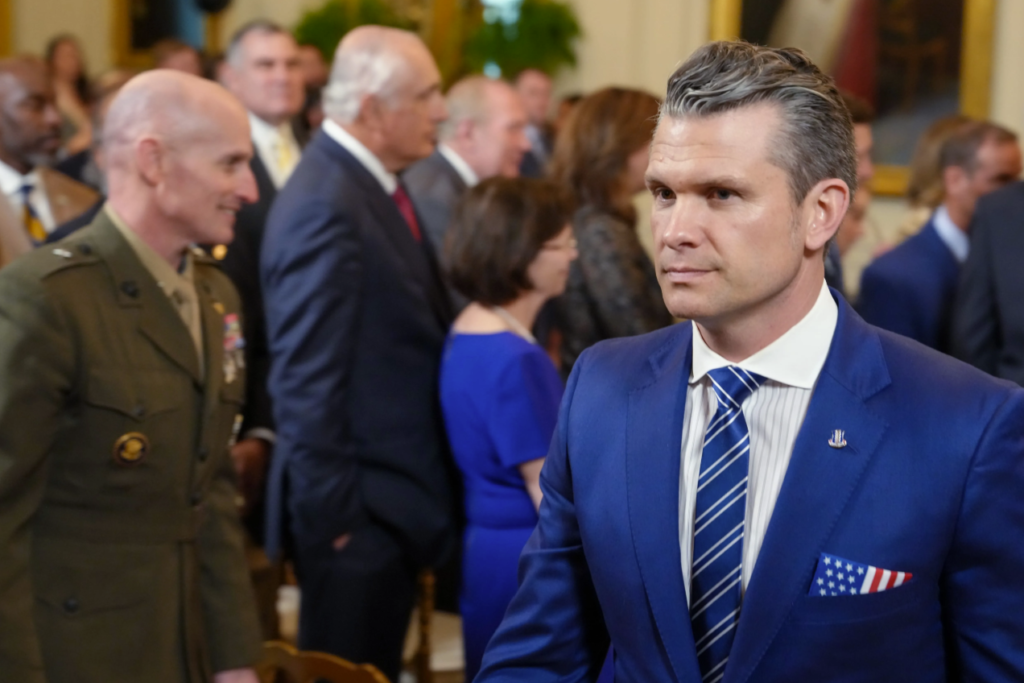
Defense Secretary Pete Hegseth appeared before the House Armed Services Committee on April 29 in an exceptionally tense session—originally intended to examine the nearly $1.5 trillion defense budget proposal for fiscal year 2027. The Pentagon’s acting comptroller, Jules Hurst III, revealed that “Operation Epic Fury” has cost approximately $25 billion to date, mostly in munitions: tens of thousands of bombs and missiles used against the 13,000 targets the Pentagon says it has struck in Iran since the start of operations on February 28. The figure, revealed officially for the first time, is significantly lower than the $200 billion the Pentagon had initially requested, suggesting a slowdown in the pace of spending since the start of the conflict. General Dan Caine, Chairman of the Joint Chiefs of Staff, confirmed that 14 American soldiers had been killed in action. Hegseth, visibly on the defensive, called the war an “astounding military success” and harshly criticized those who question the conflict: “The greatest adversary we face right now is the irresponsible, weak, and defeatist rhetoric of Democrats in Congress and some Republicans.”
Implications
This analyst has been pointing out the decapitation paradox since the very first day of “Operation Epic Fury”: eliminating the supreme leader of a criminal and brutally repressive regime does not equate to eliminating the regime; on the contrary, it can trigger a chaotic implosion or consolidate the most radical sectors in power—specifically, the triumvirate of the Islamic Revolutionary Guard Corps (IRGC) comprised of the commander-in-chief, General Ahmed Vahidi, the secretary of the National Security Council, Mohamed B. Zolghadr, and the military advisor to the leader of the Islamic revolution, Rezaei, all of them ultra-hardliners, all hostile to any substantive negotiations. Hegseth’s inability to provide a date for the end of the conflict—when Trump promised to resolve it in a matter of weeks—is precisely the starkest illustration of this decapitation paradox, highlighted in italics because it defines the strategic trap into which American planners have fallen.
The revelation of the cost—$25 billion in two months, with no supplemental budget yet submitted to Congress—comes at a time when Brent crude is trading at $118 a barrel and West Texas Intermediate (WTI) is above $106, generating global inflationary pressure that is eroding Trump’s domestic political capital more quickly and quietly than any Iranian diplomatic offensive. The exchange between Hegseth and Democratic Congressman Adam Smith—who reminded him that the Secretary himself had stated months earlier that Iran’s nuclear facilities had been “obliterated,” then questioning why the war began less than a year later—illustrates the incoherent arguments of an administration that has acted without a solid plan for the aftermath.
Perspectives and scenarios
The 60-day period under the War Powers Act expires on Friday, May 1, which would require the president to seek formal authorization from Congress to continue operations. Republicans, for now, continue to support Trump, but the rift is widening: Congressman Austin Scott (R-Georgia) publicly rejected the removal of General George as Army Chief of Staff and warned that passing the defense budget will require Democratic votes. If the diplomatic impasse with Tehran continues—Iran is demanding the lifting of the U.S. naval blockade before discussing its nuclear program, and Trump has said he will not lift the blockade—the financial, human, and political cost of the war could become a devastating electoral burden in the lead-up to the November 2026 midterm elections. This analyst believes that the complete absence of a plan for the day after—for the moment when the regime either collapses or implodes—is this administration’s most serious strategic error.
2. Trump speaks with Putin: proposes a “small ceasefire” in Ukraine; Russia attacks Odessa
Facts
President Donald Trump confirmed on April 29 that he had a phone conversation with Russian President Vladimir Putin—which the Kremlin said lasted more than 90 minutes—in which he raised the possibility of a “little bit of a ceasefire” in Ukraine. Presidential advisor Yuri Ushakov specified that Putin proposed a temporary truce linked to the May 9 Victory Day celebrations, commemorating the Soviet Union’s role in defeating Nazism in World War II. When questioned by reporters in the Oval Office, Trump stated, “I think I could accept it.” However, Kyiv was not informed of the call, nor was any formal agreement announced. Putin made a similar proposal last year; that ceasefire lasted three days and was not agreed upon with Ukraine. In this same context, Trump revealed that he had spoken with King Charles III of Great Britain—who delivered a historic speech before a joint session of the US Congress calling for “unwavering resolve” in support of Ukraine—and admitted that “we don’t agree on everything” regarding the war. Simultaneously, in the early morning hours of April 29-30, Russia launched 171 drones against Ukraine—154 of which were neutralized by Ukrainian air defenses—destroying the admissions area of the regional hospital in the Odesa region, severely damaging the cardiology, surgery, and radiology departments, and impacting port facilities and infrastructure along the Danube. Regional Governor Oleh Kiper documented the damage. Two civilians were seriously injured.
Implications
Trump’s “small ceasefire” proposal—formulated in vague terms, without formal commitments, and without coordination with Kyiv—is, at best, a diplomatic gesture with little operational value and, at worst, a sign of weakness that Putin will exploit to consolidate his positions on the ground before May 9. This analyst has been describing the war in Ukraine for months as a low-resolution, high-destruction conflict: a conflict that no one can fully win or afford to lose, and in which symbolic truces have propaganda value for Moscow—especially in the context of Victory Day—while actual military operations continue. The massive attack on Odesa—simultaneous with the truce proposals—is not a tactical contradiction: it is typical Kremlin modus operandi, which never abandons military pressure even when negotiating. Ukrainian Deputy Prime Minister Oleksii Kuleba called the attacks “further proof of terrorism: Russia is at war with civilians.” He is right.
The fact that Trump prioritized resolving the Ukrainian conflict over utilizing Russia’s offer of mediation in the Iranian affair is, in itself, significant: it reveals that Washington views Ukraine as a burden that must be resolved to have a free hand in the Persian Gulf. King Charles’s visit to Washington—the first by a British monarch before Congress since 1939—and his explicit defense of Ukraine highlight the diplomatic isolation of a Europe that urges but does not act, that deplores but does not arm itself.
Perspectives and scenarios
If Putin unilaterally announces a truce for May 9, Trump will present it as a diplomatic success, but Kyiv is unlikely to respect it without real guarantees regarding the occupied territory. The 2026 US elections and the Gulf agenda give Washington a growing interest in “closing” Ukraine—which in practice could mean pressuring Zelensky to accept territorial concessions that would be unacceptable under international law. This analyst categorically rejects the use of force as a means of acquiring territory; a principle that cannot be negotiated or compromised for short-term convenience.
3. Trump threatens to reduce US troops in Germany: a new Atlantic rift
Facts
On April 29, President Trump posted on his Truth Social platform that “the United States is studying and reviewing a possible reduction of its troops in Germany, with a decision that will be made in a short period of time.” This move comes after a dispute with Chancellor Friedrich Merz, who days earlier had publicly stated that Iran was “humiliating” the United States and criticized the lack of a coherent strategy for the conflict. Currently, more than 36,000 American troops are deployed in Germany—the largest American military presence in Europe—along with some 1,500 reservists and 11,500 civilians. Also located in Germany are the headquarters of U.S. European Command (EUCOM) and U.S. Africa Command (AFRICOM), as well as the Ramstein airbase—a key logistical hub for operations in the Mediterranean and Indian Oceans—and Landstuhl Regional Hospital, the largest American hospital outside the United States.
Implications
This threat—which Trump already made during his first term, even announcing the withdrawal of 12,000 troops in 2020 before Biden reversed it—stems from a logic of transactional pressure on European allies who have refused to support the war with Iran. NATO has not backed “Operation Epic Fury”; several allies, including Spain, have maintained a stance of neutrality that this analyst considers, in the case of the Madrid government, to be bordering on irresponsibility—especially given that the Rota and Morón air bases effectively provide logistical support for operations in the Gulf, creating a glaring inconsistency between military reality and official political rhetoric. Merz is right to point out the lack of an American strategy regarding Iran; but Trump’s response—blackmailing a key ally with the withdrawal of its troops—cannot be seen as a well-advised decision. The Europe that does not take its own defense seriously —one of the “geostrategic cardinal sins” that this analyst has been systematically denouncing— is reaping today what it sowed during decades of Atlanticism without investment.
Perspectives and scenarios
If Trump implements even a partial troop reduction in Germany, the political effect on NATO cohesion would be devastating—not so much because of the number of soldiers, but because of the signal sent to Moscow and Beijing. Berlin has already accelerated its rearmament, but continental Europe cannot close the capabilities gap in the short term. The timing could not be more inopportune: with a war raging 2,000 kilometers from Frankfurt, with Moscow testing Western resilience daily in Ukraine, and with Beijing watching every Atlantic fissure as a rehearsal for Taiwan.
4. The Taiwan issue returns to the forefront on the eve of the Xi-Trump summit
Facts
Reuters published a comprehensive analysis on April 29 regarding Taiwan’s political status—”What is Taiwan independence, and is Taiwan already independent?”—against a backdrop of intensifying Chinese pressure on the island and preparations for the summit between President Donald Trump and Chinese President Xi Jinping, scheduled for May. On April 10, Xi hosted Cheng Li-wun, chairwoman of the Kuomintang (KMT), Taiwan’s main opposition party, in their first such meeting in a decade. It is worth recalling that the KMT was founded by Sun Yat-sen and became the dominant party in Taiwan, where its members sought refuge after their defeat in the civil war, in which Chiang Kai-shek was the strongman.
Xi reiterated that “Taiwan independence is the main threat to the stability of the Taiwan Strait” and called for opposition to “any separatism and outside interference.” In recent weeks, Beijing has pressured Madagascar, Mauritius, and Seychelles to revoke overflight permits for Taiwanese President Lai Ching-te’s aircraft. Taiwan operates de facto independently—with its own armed forces, democratically elected government, and currency—but only 12 countries formally recognize it.
Implications
The Hormuz crisis has generated a major geopolitical side effect: it has demonstrated to Beijing—with chilling clarity—what happens when a middle power controls a strategic strait. In March, China offered Taiwan “energy stability” if it accepted its sovereignty; Taipei rejected the offer, calling it “cognitive warfare.” The American Enterprise Institute (AEI) warned in its latest China-Taiwan update that Beijing’s actions to prevent President Lai’s diplomatic trips represent unprecedented steps in the erosion of Taiwanese sovereignty. This analyst is very vigilant regarding Chinese expansionism in Asia and the Pacific, and cannot help but point out that the worrying parallel between Tehran’s strategy in Hormuz and Beijing’s doctrine on the Taiwan Strait is not accidental: both regimes are learning from each other.
Perspectives and scenarios
The Xi-Trump summit in May may be the moment when Washington implicitly offers reduced guarantees on Taiwan in exchange for Chinese cooperation on the Iran issue—including the management of enriched uranium and the reopening of the Strait of Hormuz. This kind of transactional “grand bazaar,” if confirmed, would represent an existential threat to Taiwanese democracy and to the liberal order in the Indo-Pacific. It is being followed with the utmost attention in Tokyo, Seoul, Canberra, and Manila.
5. US accuses Sinaloa governor of cartel ties: Mexico’s narco-state exposed
Facts
A federal grand jury in the Southern District of New York unveiled an indictment on April 29 against Rubén Rocha Moya, the sitting governor of the Mexican state of Sinaloa, and nine other current or former state officials, charging them with drug trafficking and weapons-related offenses for allegedly collaborating with the “Chapitos”—the sons of Joaquín “El Chapo” Guzmán Loera, currently imprisoned in the United States—to smuggle massive quantities of fentanyl, heroin, cocaine, and methamphetamine into the United States. Prosecutor Jay Clayton stated in New York that “the Sinaloa Cartel could not operate so freely or so successfully without corrupt politicians and law enforcement officials at its beck and call.” According to the indictment, Rocha Moya allegedly agreed with the Chapitos before the 2021 elections to protect them in exchange for electoral support—which included kidnapping and intimidating rival candidates and stealing ballot boxes. DEA Administrator Terrance Cole designated the Sinaloa Cartel a “designated terrorist organization.” The Mexican government responded by stating that the American documents “lack sufficient evidence.”
Implications
This analyst has spent years denouncing the narco-state—understood as the systematic capture of state structures by large-scale criminal organizations—as not a metaphor but an operational reality in vast regions of Mexico. The indictment of a sitting governor of one of the country’s most populous states is unprecedented in the recent history of Mexico-US relations and signals a shift in doctrine under the Trump administration: it is no longer enough to pursue the kingpins; the politicians who protect them are also being targeted. The fact that Rocha Moya is a member of the Morena party—the party of Mayor Claudia Sheinbaum and former President López Obrador—adds an explosive political dimension to the bilateral diplomatic crisis.
The fact that the dossier points to connections between the Sinaloa Cartel and cocaine producers in Colombia and Venezuela, traffickers in Central America, and manufacturers of chemical precursors in China, confirms what this analyst has documented in multiple works: international narcoterrorism is a global value chain in which Caracas—under the Chavista regime, now headed by the sinister siblings Delcy and Jorge Rodríguez—acts as a protective node and logistical facilitator.
Perspectives and scenarios
Mexico’s reaction will likely be a formal rejection of the extradition request, further straining relations with Washington. Vanda Felbab-Brown, an analyst at the Brookings Institution, noted that “it is certainly a shift in the American strategy to prosecute a sitting government official.” If the Trump administration persists in this approach—extending the logic of designated terrorist organizations to the entire spectrum of political corruption that protects them—the deterrent effect on Latin American political elites who coexist with organized crime could be significant. But it will also open a diplomatic front that will strain bilateral cooperation on migration, trade, and border security.
III. MEDIA RACK
| HALF | EDITORIAL LINE / MAIN FOCUS |
| THE NEW YORK TIMES | Comprehensive coverage of the cost of the war with Iran: $25 billion. Brent crude oil reaches $118/barrel. King Charles III addresses Congress, calling for “unwavering resolve” in support of Ukraine. |
| WASHINGTON POST | Secretary Hegseth confronted by Democrats and Republicans on the Armed Services Committee. The Pentagon has no clear plan for the day after in Iran. War declared without congressional authorization. |
| REUTERS / AP / AFP | Factual summary: costs of “Operation Epic Fury,” attack on Odessa, Trump-Putin, indictment of the governor of Sinaloa, troop review in Germany. Neutral and verified coverage. |
| FINANCIAL TIMES / THE ECONOMIST | Alarm over the global economic effects of the closure of the Strait of Hormuz. Oil at $106/barrel in the US market. Risk of recession in Asia. Warning about Europe’s strategic impotence. |
| THE GUARDIAN / BBC | Emphasis on civilian casualties in Ukraine (Odesa) and Iran. Criticism of the lack of a parliamentary mandate for the war. King Charles’s speech before the US Congress is seen as a historic milestone. |
| LE MONDE / LE FIGARO | French concern over the possible withdrawal of US troops from Germany. Merz-Trump tension. European coolness regarding the war with Iran. The Strait of Hormuz as a catalyst for the continent’s energy fragility. |
| FAZ / DIE WELT / DIE ZEIT | Berlin on high alert after Trump’s announcement of a possible reduction of the 36,000 American troops stationed in Germany. Merz attempts to manage the diplomatic crisis. |
| CORRIERE DELLA SERA | Italy continues to follow the situation in the Persian Gulf with concern. The energy cost of the war with Iran threatens the European economic recovery. |
| AL-JAZEERA / AL-ARABIYA | The indictment of the governor of Sinaloa is seen as a sign of a new American doctrine of pressuring governments in the Global South suspected of having ties to organized crime. The blockade of the Strait of Hormuz continues. |
| KYIV POST / KYIV INDEPENDENT / UKRAINIAN PRAVDA | Condemnation of the Russian attack on Odessa: “pure terrorism,” in the words of the Ukrainian deputy prime minister. 171 missiles launched, 154 neutralized. Urgent call for more air defense systems. |
| SOUTH CHINA MORNING POST / CHINA DAILY | Beijing is observing the growing distance between the two nations with satisfaction. The Taiwan issue is returning to the forefront with the debate over independence, on the eve of the Xi-Trump summit scheduled for May. |
| CNBC / BLOOMBERG / WSJ | Brent crude at $118/barrel. US crude at $106. Markets fear that the prolonged conflict with Iran will raise global inflation. Signs of financial instability in Asia. |
| MILITARYTIMES / NPR / CBC | Detailed breakdown of the cost of “Operation Epic Fury”: $25 billion, primarily ammunition. 14 American soldiers killed. Hegseth has no end date set for the conflict. |
| HAARETZ / JERUSALEM POST | Israel, a co-belligerent silenced in the American debate. The war with Iran is being fought with tacit Israeli support, but the political and diplomatic cost falls on Washington. A strategic dilemma for Tel Aviv. |
IV. RISK TRAFFIC LIGHT
| LEVEL | IDENTIFIED RISK |
| RED — CRITICAL | US-Iran armed conflict. Strait of Hormuz blocked. Brent crude at $118/barrel. Risk of regional escalation (Persian Gulf). |
| RED — CRITICAL | Russia-Ukraine War. Bombing of Odessa (port and civilian infrastructure, hospital destroyed). Absence of a real ceasefire. |
| ORANGE — STOP | US troop reduction in Germany: an Atlantic rift. Trump’s blackmail of NATO amid the Iranian conflict. |
| ORANGE — STOP | Taiwan: Xi-Trump summit planned for May. Beijing pressures Taipei and the island’s diplomatic allies. |
| YELLOW — MODERATE | Narco-state in Mexico: Sinaloa governor indicted. Potential Mexico-US diplomatic crisis. |
V. EDITORIAL COMMENTARY
The $25 billion cost of “Operation Epic Fury” is not just a budget figure. It quantifies a colossal military effort that, to date, has yielded no stable political results. The Strait of Hormuz remains blocked. The jihadist oligarchy that controls Tehran—not a theocracy, but a mafia-like criminal structure entrenched in power—continues to negotiate from a position that calculates, with some justification, that time is on its side. Oil at $118 a barrel is generating inflation that is quietly eroding popular support for Trump within the United States and is particularly harsh on Asian economies dependent on energy imports from the Gulf. Hegseth is right about one thing: halting the Iranian nuclear program was a legitimate and urgent objective. This analyst has unequivocally maintained this. But having a legitimate objective does not excuse the need for a plan. And that plan —for the day after, for the transition, for the power vacuum— is conspicuous by its absence.
The paradox of decapitation—the risk that removing the figurehead of a totalitarian regime will trigger not its orderly collapse but an internal war that consolidates the most radical factions—is not a theoretical prediction: it is what we are witnessing with the IRGC triumvirate. Vahidi, Zolghadr, and Rezaei are no less dangerous than Khamenei; in many ways, they are more dangerous because they are military men without the need to maintain any theological (ideological) or institutional facade. Pezeshkian’s reformism, systematically blocked, is irrelevant in this power structure.
In Ukraine, the sequence is equally revealing: Trump proposes a “small ceasefire”—a brief truce—while Russian drones destroy hospitals in Odesa. Putin celebrates Victory Day with unilateral truce proposals that Moscow can break at any moment and that do not require any territorial withdrawal. The war of variable temperature—a concept I have been using to describe conflicts with low political resolution but high human destruction—finds no solution in these proposals: only a convenient pause for the aggressor. I am unequivocally opposed to Russian aggression against Ukraine, opposed to the use of force to acquire territory, and I cannot fail to point out that every “small truce” that is not accompanied by verifiable guarantees and an international presence contributes, in practice, to consolidating Russian conquests on the ground.
Trump’s threat to reduce troops in Germany deserves to be taken seriously—not as a rhetorical ultimatum, but as a sign of waning American patience with a Europe that has spent decades building its security under the American umbrella without paying the price. Chancellor Merz is right to criticize the lack of American strategy in Iran; but it is unacceptable for a serious head of government to say in a speech that a terrorist state is humiliating the US. That is the cause of Trump’s irritation. A Europe that has not invested in its defense, that has helplessly watched Russian aggression, that has fought with Washington instead of building its own capabilities, cannot now claim a leadership it has not earned. That Ramstein—a German base—is the central logistical hub for American operations in the Mediterranean and the Gulf, while the German government and NATO proclaim neutrality, is a structural hypocrisy that no one in Brussels has the courage to acknowledge.
Taiwan and Mexico complete this grim picture with two risk factors that should not be underestimated. In Taiwan’s case, the lesson of the Strait of Hormuz—that a middle power can strangle critical trade routes with relatively few resources if it has the determination to do so—has not been lost on Beijing. The Xi-Trump summit in May may be the moment when Taiwanese democracy receives the worst possible news from Washington: that it has been implicitly incorporated into a transactional bargaining game between great powers. In Mexico’s case, the indictment of the governor of Sinaloa confirms what we have been denouncing for years: the narco-state is not a metaphor; it is a governing reality in some territories of Latin America, with ramifications that extend from Caracas—under the execrable Chavista regime now led by the sinister Rodríguez brothers—to the streets of Chicago and the European coasts.
The question that hangs over all these crises is the same one this analyst has been asking since the beginning of “Operation Epic Fury”: Does Washington have, somewhere in its strategic architecture, a coherent and actionable plan for the aftermath? The $25 billion spent, the 14 soldiers killed, the blockaded Strait of Hormuz, oil at $118 a barrel, and the lack of an end date demand an answer. And Hegseth, in five hours of parliamentary testimony, was unable to provide one.