Gustavo de Arístegui,
May 5, 2026
I. BRIEF INTRODUCTION
The day dawns with the now familiar, almost routine feeling that the international system teeters on the brink of collapse, held together by precarious balances that any excess could shatter. The dawn of May 5th finds the Strait of Hormuz once again at the world’s epicenter: the US operation “Project Freedom”—Donald Trump’s attempt to unblock, by escorting ships, a waterway through which, before the war, some 20% of the world’s seaborne crude oil flowed—has resulted in an exchange of fire between the US Navy and the Iranian jihadist oligarchy, with cruise missiles launched by IRGC (Islamic Revolutionary Guard Corps) terrorists, drones against merchant vessels, and an Iranian attack—the first against energy infrastructure in weeks—on the port complex of Fujairah in the United Arab Emirates.
While Brent crude climbed to $114 a gallon—its highest level since mid-2022—and US gasoline approached $4.46 a gallon, Vladimir Putin and Volodymyr Zelensky were staging, almost simultaneously, a battle of rival ceasefires around Victory Day on May 9: two unilateral truces, two opposing timetables, and no trust. In Beijing, the Chinese Ministry of Commerce activated its extraterritorial mechanism against US sanctions for the first time in five years, just before the Trump-Xi summit on May 14 and 15. And in southern Lebanon, the April 16 ceasefire—extended until mid-May—has ceased to exist except on paper, with Israel issuing new orders for forced evacuation and Hezbollah terrorists resuming attacks north of the Yellow Line.
It is important to define the framework precisely: what I have been describing for weeks as a “contained systemic fracture” is beginning to show deeper cracks. This analyst estimates that the next seventy-two hours—between the noise of the newspapers and the deliberate silence of foreign ministries—will determine whether the so-called “variable-temperature wars”—those low-resolution but high-destruction conflicts that no one can win or afford to lose—remain at their current level or slide toward an escalation that no actor is now capable of orchestrating.
II. MOST IMPORTANT NEWS OF THE LAST 24 HOURS
1. “Project Freedom” enters its heated phase: exchange of fire in Hormuz, Fujairah hit
Facts
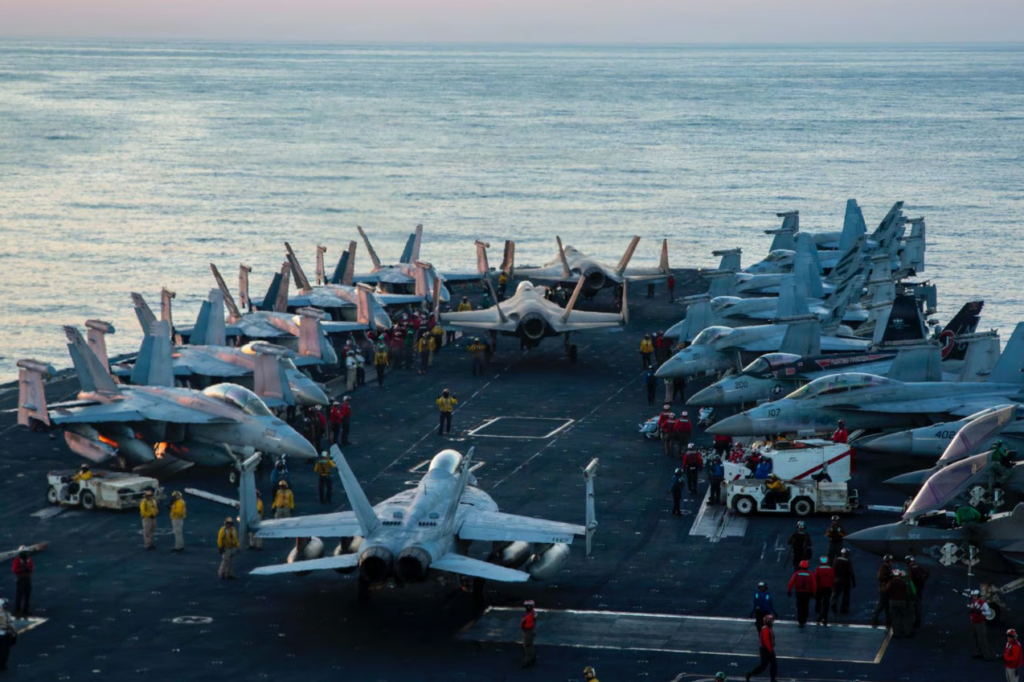
CENTCOM confirmed that two US-flagged merchant ships transited the Strait of Hormuz under naval escort, while guided-missile destroyers operated in the Persian Gulf beyond the strait. The Iranian jihadist oligarchy fired cruise missiles and drones at warships and merchant vessels; CENTCOM reported the sinking of seven small Iranian boats. The UAE recorded a fire in the Fujairah oil port area—the first impact on energy infrastructure in weeks—and the interception of incoming missiles. At the close of trading on May 4, Brent crude was trading around $113-$114 and WTI at $105, with US gasoline at a four-year high, nearing $4.46 per gallon.
Implications
Trump has opted for a calibrated response—selective escort instead of a full reopening—to reactivate the flow of ships without triggering a strategic escalation. The problem, as the shipping industry itself has warned, is mathematical rather than geopolitical: there are about a dozen US warships capable of defending merchant vessels, compared to the more than one hundred that crossed the Strait of Hormuz daily before the war. The numbers don’t add up, and the insurers—Lloyd’s, NorthStandard—know it. Bessent has pressured Beijing to “push” Tehran to reopen the strait, in a sequence that directly links the energy issue to the May 14-15 summit in Beijing.
Perspectives and scenarios
Central scenario (medium-high probability): maintenance of the status quo—drip-feed transits under escort, Brent crude fluctuating in the $105-$120 range—until the Trump-Xi summit, which will act as a “decompression milestone” or, failing that, a breaking point. Adverse scenario (medium probability): kinetic impact with a US destroyer or a supertanker, which would send the price of oil above $130 a barrel and force a breakdown of the April 7 ceasefire. Favorable scenario (low-medium probability): limited opening negotiated via Beijing-Moscow, with China collecting on the favor through tariffs and semiconductors.
2. Putin and Zelensky stage rival truces for May 9
Facts
Putin declared a unilateral ceasefire on May 4, effective from May 8 to 9, coinciding with the 81st anniversary of Victory Day over Nazi Germany. The Russian Ministry of Defense warned that any Ukrainian attempt to disrupt the celebrations would trigger “a massive retaliatory missile attack on the center of Kyiv” and urged civilians and diplomatic personnel to leave the city. Zelensky, speaking from the European Political Community summit in Yerevan, countered with his own ceasefire beginning at midnight on May 5-6, with no end date set, and reiterated his proposal for a 30-day truce. Moscow’s intervention this year will be without a heavy military parade—no tanks in Red Square for the first time in years— due to fears of Ukrainian drones, which in recent days have struck refineries such as Lukoil-Permnefteorgsintez, more than 1,500 km from the front lines.
Implications
Putin’s gesture is not diplomatic: it’s theatrical. A 48-hour truce declared unilaterally, with the threat of massive bombing of the adversary’s capital if a parade is “disrupted,” is not a peace proposal; it’s a typical propaganda stunt. Zelensky’s counteroffer—an early and open truce—forces Moscow to confront its own rhetoric. Negotiations have been stalled for more than two months, while American diplomatic attention has shifted to the Iranian front. The draft known as the “Anchorage Understanding,” which in August 2025 suggested ceding all of Donetsk to Moscow, remains the basis for negotiations—a basis unacceptable to Kyiv and dangerously close to appeasement.
Perspectives and scenarios
The undersigned analyst estimates that we will witness a symbolic truce on May 8-9—both sides will hold back on conventional artillery fire while continuing to use long-range drones—without diplomacy making any progress whatsoever. Kyiv has learned what Brussels has yet to: with the Kremlin, short-term truces are weapons of time, not of peace. The real pressure will continue to be that of the European energy winter and the slow hemorrhage of Russian industry, accelerated by Ukrainian attacks on refineries.
3. Beijing activates its anti-sanctions mechanism for the first time: a doormat for Trump
Facts
On May 2, China’s Ministry of Commerce (MOFCOM) issued Notification No. 21, which, for the first time since its promulgation in January 2021, activates the Regulation on the Unjustified Extraterritorial Application of Foreign Law. The text orders all Chinese individuals, entities, and organizations to “not recognize, not apply, and not comply” with Trump’s Executive Order 13902 and names five Asian refineries targeted by secondary US sanctions. The move comes twelve days before the Trump-Xi summit on May 14 and 15 in Beijing, the first visit by a US president to the People’s Republic in nearly a decade.
Implications
It is difficult to overstate the significance of this move. For decades, Washington designed its sanctions architecture based on an implicit assumption: that no systemic actor would retaliate with a symmetrical mechanism. That assumption expired on May 2, 2026. Beijing has activated a private action right that allows its companies to sue those who apply extraterritorial US sanctions. The signal is clear: the rules of the game are being rewritten in Beijing, and the BRICS—of which China is the de facto leader—will follow suit. This dramatically reshapes Trump’s negotiating position in the Strait of Hormuz, where Bessent has been urging Beijing to engage in “a little diplomacy with Tehran.”
Perspectives and scenarios
The May 14-15 summit will no longer be—as the White House intended—a display of stability: it will be a test of negotiating power. Xi arrives with a strong hand: rare earth elements, gallium (99% of global production), a newly activated anti-sanctions mechanism, and the Iranian lever. Trump arrives with an unfinished war, oil at $114 a barrel, and public opinion—32% approve of the war against Iran—that is slipping away from him. Analysts have been clear for some time: “Sanctions are cards played by losers.” Today we may be witnessing empirical confirmation of that maxim.
4. Lebanon: The ceasefire “exists only on paper” — forced evacuation orders issued north of Litani
Facts
On May 3, the Israeli army issued new forced evacuation orders for more than ten towns in southern Lebanon, including several in the Nabatieh district, north of the Litani River—outside, therefore, the “buffer zone” declared by Israel. The US-brokered ceasefire, in effect since April 16 and extended until mid-May, has been violated—according to Hezbollah—in more than 500 incidents; Israel responds that the Shiite terrorist organization is rearming in systematic violation of the agreement. Israeli Chief of Staff Eyal Zamir warned last week that any threat “beyond the Yellow Line and north of the Litani will be eliminated.” Hezbollah terrorists have killed two Israeli soldiers and an army contractor in the past week using drone strikes.
Implications
The Lebanese ceasefire of April 16 was, from its inception, a fragile construct; in reality, a tactical pause to allow for formal negotiations between Beirut and Tel Aviv—the first since the failed agreement of May 17, 1983—not a sustainable cessation of hostilities. Hezbollah, militarily decapitated after the dismantling of its leadership and orphaned by Tehran due to the economic strangulation of the Iranian jihadist oligarchy, now operates under the logic of the “decapitation paradox”: the more it is dismantled, the more its capacity for asymmetric damage is dispersed, and the more difficult it becomes to neutralize it completely. The Beirut government—which already banned all military activities of the terrorist group in March and demands its disarmament—faces the political impossibility of enforcing the decision without triggering a civil war.
Perspectives and scenarios
I have maintained, since my academic report “Lebanon: Martyr State,” that the only sustainable way forward is a three-layered security architecture: effective disarmament of Hezbollah’s terrorist apparatus; deployment of the Lebanese Armed Forces (LAF) south of the Litani River with robust international support; and political integration of Lebanese Shiism independent of Tehran. The next two weeks will be critical. If the extension of the ceasefire is not accompanied by concrete progress in the Beirut-Tel Aviv talks, the likely scenario is an accelerated return to open warfare, with devastating humanitarian consequences and a new wave of displacement that could exceed the more than one million already recorded.
5. Venezuela: Chavismo reorganizes after Maduro’s fall — surge in attacks against drug-running boats
Facts
The Washington Post published an analysis on May 4 confirming a resurgence in U.S. attacks against vessels suspected of drug trafficking in the Caribbean and the Eastern Pacific, following the relative lull that followed Nicolás Maduro’s capture on January 3 in Operation Absolute Resolve. Maduro and Cilia Flores are awaiting their next court hearing, postponed until the end of the month, at the Metropolitan Detention Center in Brooklyn. Vice President Delcy Rodríguez—sworn in as interim president on January 5 and formally recognized by Washington on March 7—is consolidating power by appointing loyalists to the Attorney General’s Office and the Ombudsman’s Office. Senator Rick Scott criticized Rodríguez on May 4 for her ties to drug cartels and for the detention of hundreds of political prisoners.
Implications
The Chavista regime hasn’t fallen: it has been reconfigured. The sinister Rodríguez siblings—Delcy as interim president, Jorge controlling the National Assembly—now operate under a logic of “normalization without transition,” a phrase popularized by analyst Benigno Alarcón Deza. This means: partial OFAC licenses, the Chevron agreement in the Orinoco Oil Belt, the FARA (Special Fund for the Defense of the Armed Forces) registration, a rhetorical amnesty with 473 political prisoners still detained, and the institutional capture of the so-called Citizen Power. María Corina Machado, the 2025 Nobel Peace Prize laureate, has argued—with a realism that some cannot forgive—that the transition requires the regime itself to do “the dirty work.” It’s a risky but coherent bet: time, she says, is on the side of those who know how to wait; this analyst isn’t entirely convinced.
Perspectives and scenarios
That the execrable Chavista regime—which is and has been a cosmically corrupt mafia organization, a narco-state in the strictest sense—fall once and for all is a moral and hemispheric security imperative. The question is how. The Trump-Rubio policy has opted for leveraging oil and selective military pressure against drug-running boats, a position I wholeheartedly support. But the transition cannot be sustained if the Rodríguez clan entrenches itself. This analyst maintains that without free elections and without a genuine dismantling of the repressive structure, what we will have is a “kosher” Chavismo—sanctionable, yes, but operational. The question for the next six months is whether Washington will have strategic patience or whether Trump will become impatient and force the outcome.
6. Europe: Loss of 5,000 American troops in Germany and the crossroads of rearmament
Facts
The Pentagon confirmed the phased withdrawal of 5,000 US troops from Germany over the next twelve months, a decision that German Defense Minister Boris Pistorius called “premature” but which the Republican chairman of the House and Senate Armed Services Committees have received with express concern. Meanwhile, a leak of Pentagon emails reveals that Spain is being considered for suspension from NATO’s operational framework—though not formally from the treaty—in retaliation for its refusal to allow the use of bases and airspace for missions against Iran and for Pedro Sánchez’s rejection of the target of spending 5% of GDP on defense by 2035. The ReArm Europe/Readiness 2030 plan, structured around the €150 billion SAFE instrument, is progressing unevenly among member states.
Implications
For months now, I’ve been describing one of the structural paradoxes of our time: the European societies that most distrust Trump are simultaneously the least willing to pay the price for their strategic independence. Poland and the Baltic states—the most pro-NATO—are rearming; Germany, France, and Spain—the most critical of Washington—are hesitant. And here I must be clear, once again: the Spanish government’s position is more hostile to the United States than to the jihadist oligarchy in Tehran; it maintains a stance of neutrality that borders on irresponsibility while the Rota and Morón air bases continue to be—as anyone familiar with the dossier knows—active logistical support for operations. The inconsistency between military reality and public discourse reaches grotesque levels. I’m not asking for maximalism: I’m asking for consistency. The spectacle of a Spanish prime minister lecturing the Alliance while his bases fly missions he claims not to authorize is unworthy of a serious democracy.
Perspectives and scenarios
The question is no longer whether Europe will rearm—it is already doing so, albeit poorly and late—but with what industrial architecture and under what doctrine. As Francisco Sánchez, president of Airbus Spain, warned, spending 5% without a common industrial plan is “to deepen dependence, not resolve it.” Europe is 30 years behind in some critical technologies, manufactures a dozen main battle tanks—compared to just one in the US—and lacks the real capacity to simultaneously sustain a war on its eastern flank and another on its southern flank. The risk, this time, is not rhetoric: it is that the mediocre and short-sighted European political class will continue to confuse budgets with capabilities, and purchases with strategic autonomy.
III. MEDIA RACK
- The New York Times / Washington Post. Intense coverage of the exchange of fire in Hormuz; the WaPo retrieves the dossier on the attacks against drug boats and opens an editorial vein on the “extralegality” of the Southern Command’s operations.
- The Wall Street Journal/Financial Times. The WSJ emphasizes the naval math—only a dozen ships capable of escorting merchant vessels—and the risk of Project Freedom collapsing due to exhaustion. The FT positions China’s Notification No. 21 as a “turning point” in the global sanctions architecture.
- The Times, The Telegraph, and The Guardian. All three British newspapers agree on the “theatricality” of the rival truces of May 9. The Guardian is the most critical of Israel for the evacuation orders north of the Litani River.
- Le Monde / Le Figaro / Libération / La Croix / Le Point. Le Monde editorializes on the loss of European strategic credibility following the partial withdrawal of US troops from Germany. Le Figaro revisits Macron’s thesis of “strategic autonomy,” now voiced by Bardella.
- FAZ / Die Welt / Die Zeit. The German press —disciplined as ever— focuses on the downsizing of the May 9th parade in Moscow and on the industrial-energy cost of Brent crude oil remaining above $100 for the German economy.
- Corriere della Sera / L’Osservatore Romano. Corriere reads the Trump-Xi summit as “the true test of the post-bipolar order.” L’Osservatore reiterates its call for a cessation of hostilities in Lebanon and the protection of Christian sites in the south.
- BBC / CNN / Fox News / CBS / CNBC / Bloomberg / Newsweek / Time. BBC and CNN highlight the fragility of the ceasefire with Iran. Fox prioritizes the operational success of the blockade and the sinking of the seven Iranian vessels. Bloomberg and CNBC focus on imported inflation and the risk of gasoline reaching $5 per gallon.
- LCI / BFM / France Info / L’Express / Nouvel Observateur. French channels provide detailed coverage of the European Political Community summit in Yerevan and Zelensky’s gesture. L’Express dedicates its front page to “Bardella on rearmament.”
- Reuters / AFP / AP / DPA. The agencies coordinate flash reports on Putin–Zelensky, Fujairah and Notice No. 21. AFP highlights the Russian warning of a “massive attack” on Kiev.
- WION / Times of India / Hindustan Times / Indian Express. The Indian press focuses on the impact of the closure of the Strait of Hormuz on the national energy bill —India receives around 35% of its crude oil through the strait— and on the Yerevan summit.
- South China Morning Post / China Daily / Yomiuri Shimbun / Tokyo Times / Straits Times. The SCMP analyzes Notice No. 21 as a “doormat” for Trump. China Daily promotes the “mutual respect” narrative. The Yomiuri Shimbun and the Straits Times focus on Asian energy dependence and Japan’s necessity to purchase Russian crude.
- RT/TASS/Vesti/Gazeta Wyborcza. Russian media emphasize the “humanitarian” gesture of the May 9 truce and downplay the drone attacks on refineries. Gazeta Wyborcza highlights Polish unease over the American withdrawal from Germany.
- Kyiv Post / Kyiv Independent / Ukrainian Pravda / UKRINFORM / Facts and Comments. The Ukrainian press reports Zelensky’s counter-offer and his speech from Yerevan. Kyiv Independent highlights the Swedish seizure of a fifth vessel from Russia’s ghost fleet in the Baltic.
- Yedioth Ahronoth / Israel Hayom / Jerusalem Post / Haaretz / Maariv. The Israeli press —divided as usual— oscillates between support for the new evacuation orders (Israel Hayom, Jerusalem Post) and Haaretz’s criticism of the slide towards a new war in the south.
- Al-Jazeera / Al-Arabiya / Al-Hayat / An-Nahar / L’Orient-Le Jour / Daily Star. Al-Jazeera maintains its pro-Palestinian stance on Lebanon. L’Orient-Le Jour, the Lebanese French-language daily, warns that the ceasefire “exists only on paper.” An-Nahar calls for an international conference on disarmament.
- Jordan Times / Al-Rai / Hürriyet / Al-Quds Al-Arabi / Al-Hayat al-Jadida / Al-Ayyam / Filastin. The Jordanian and Palestinian press remain focused on Gaza and southern Lebanon. Hürriyet reports with concern on the influx of Syrian refugees and the Turkish energy costs.
- Peninsula Qatar / Gulf News / Khaleej Times / Gulf Today / Al-Ittihad / Times of Oman / Saudi Gazette / Arab News / Asharq al-Awsat / Al-Riyadh. The Gulf press—particularly Khaleej Times and Gulf News—is raising its voice regarding Fujairah and the risks to Emirati energy infrastructure. Asharq al-Awsat published an editorial calling on Riyadh to coordinate with Washington for a “secure Hormuz.”
- Foreign Affairs / The Economist / National Interest / EIU / Politico / The Hill / Axios / USA Today / Washington Times / The Daily Beast. Foreign Affairs publishes an analysis of the risks of transatlantic friction. The Economist focuses on the “sunk cost” of the Iran war. Politico and Axios cover the internal Republican rift over the operation.
- Clarín / El Mercurio / Reforma / La Tribune de Genève / Helsingin Sanomat / Mail and the Globe. The Ibero-American press focuses on Venezuela and the attacks against drug-running boats. Helsingin Sanomat reiterates the Finnish debate on Arctic deterrence.
- Daily Jang / Pakistan Times. Coverage of Pakistan’s mediating role in the US-Iran talks and the risks of closing the Strait of Hormuz to the national trade balance.
- RUSI / IISS / CSIS / IFRI / EIU / think tanks bulletins. RUSI publishes a policy brief on the tactical unsustainability of “Project Freedom.” IISS analyzes Iran’s repositioning after successive top-level removals. CSIS publishes data on the collapse of semiconductor supply chains. IFRI editorializes on the fragility of the European consensus on defense.
IV. RISK TRAFFIC LIGHT
● RED — Strait of Hormuz / “Project Freedom”. Medium-high probability (40-55%) of a major kinetic incident in the next 7-10 days. Brent crude at $113-$114; US gasoline at $4.46/gallon. Risk of a breakdown in the April 7 ceasefire.
● RED — Southern Lebanon (Yellow Line, Litani). The April 16 ceasefire has effectively collapsed. Evacuation orders are in place for areas north of the Litani. There is a medium-to-high probability of a return to open warfare before mid-June if the ceasefire is not extended with verifiable commitments.
● ORANGE — Trump–Xi Summit (May 14-15, Beijing). China’s activation of the anti-sanctions mechanism (Notif. 21) rewrites the negotiating balance. High risk of a summit without substantive deliverables. Global implications for the secondary sanctions regime.
● ORANGE — Ukraine / May 9 truces. Symbolic truce likely; strategic stalemate persists. Low-medium risk of drone incident over Moscow or Russian retaliation against Kyiv.
● ORANGE — Venezuela / Rodríguez transition. Surge in attacks against drug-running boats. Entrenchment of the Rodríguez clan. No free elections in sight. Risk of “normalization without transition” that benefits the mafia structure inherited from Chavismo.
● YELLOW — Europe / loss of 5,000 US troops in Germany. Expected move but with greater political impact. Possible operational suspension of Spain from NATO. Internal tensions within the ReArm Europe Plan.
● YELLOW — Sudan / RSF–SAF. Conflict in its fourth year, military stalemate. Drones intensifying in Kordofan and Darfur. Humanitarian crisis without proportionate international attention.
● GREEN — European Political Community Summit (Yerevan). Useful forum for informal coordination. No associated systemic risks.
V. EDITORIAL COMMENTARY
There are days—and May 5th is one of them—when the international order is seen as a cathedral under construction, where architects, foremen, and laborers have all failed simultaneously. The Iranian jihadist oligarchy—which is and remains the most dangerous terrorist state in the world, a serial exporter of instability through its proxies (Hezbollah terrorists, Houthi terrorists, Hamas terrorists, the pro-Iranian terrorist militias in Iraq, and the puppets in Central Asia)—has survived the removal of Khamenei by transforming into something else entirely: a ruthless tripartite structure of the IRGC—Vahidi, Zolghadr, Rezaei—ultraconservative to the core, which has gutted Pezeshkian’s reformist presidency. And yet, it remains, harassing, undermining, playing with other people’s lives in the Strait of Hormuz.
I have been—and remain—in favor of the attacks against Iran. The nuclear and missile capabilities of the jihadist oligarchy represented—and still represent—an existential threat not only to Israel, but to the entire non-proliferation order. But I have also been—and must continue to be—extremely critical of the utter lack of post-war planning that has characterized this war. Operation Epic Fury has been a military success and a strategic failure: the regime has been decapitated without any preparation for succession, the system has been fractured without any thought given to the aftermath. The result is this “contained systemic fracture” that I have been describing, where the regime, decapitated but not overthrown, has become, if possible, even more ruthless, brutal, and vicious.
Trump’s foreign policy has, it must be acknowledged, produced significant diplomatic successes in less than a year: the ceasefire between Cambodia and Thailand, the progress between Azerbaijan and Armenia, and the advances in Gaza. When he acts prudently and is advised by Marco Rubio—whose approach is, quite simply, the sensible one—the result is effective. The problem arises when decision-making becomes erratic and driven by excess. “Project Freedom” was born out of the frustration of a golfer in Florida—Trump announced the operation from his course—and bears the inherent mark of any impulsive decision: an inability to sustain itself, a lack of naval planning, and the absence of preparatory diplomatic theater. The arithmetic of the ships will spare no one.
Regarding Venezuela, this analyst maintains an unequivocal position: the Chavista narco-dictatorial regime—first headed by Maduro and now by the sinister Rodríguez brothers—is a cosmically corrupt mafia organization, a structure of pure and simple narcoterrorism that must fall once and for all. The attacks against drug-laden boats are legitimate and necessary; Maduro’s capture was a long-awaited act of justice. But a real transition—the only one that deserves the name—requires free elections and the effective dismantling of the repressive apparatus. What we see today under Delcy Rodríguez is—to borrow the phrase from Venezuelan analyst Alarcón Deza—”normalization without transition”: a dangerous sequence that whitewashes the regime without democratizing it. Trump and Rubio would do well not to fall for the mirage of cosmetic stability.
Regarding Europe—and Spain—the diagnosis is now beyond ambiguity. I remain an Atlanticist at heart and a staunch European; but precisely for that reason, I must say it: the mediocre and short-sighted political class of the 21st century is incapable of taking its own defense, its own security, its own destiny seriously. The paradox of European rearmament—that those least Atlanticist are the least willing to pay for strategic independence—is the coded confession of collective cowardice. And the position of the Spanish government is indefensible: it borders on irresponsibility, maintains a greater public hostility toward Washington than it displays toward Tehran, and thrives on an operational hypocrisy—Rota and Morón are functioning, I say this without hesitation—that insults intelligence. I am not asking for maximalism: I am asking for coherence. The Spanish transition—whose architect was King Juan Carlos I, a figure whose historical legacy I resist any attempt at demolition amidst the noise of present-day relativism—bequeathed to us a way of conducting serious, negotiated, and high-level politics. What governs Madrid today is the antithesis of that legacy.
The Trump-Xi summit on May 14 and 15 will be—and this must be said clearly—the decisive test of how far the global order can be rebuilt after this dizzying quarter. If Beijing exacts a heavy price for its Iranian leverage, if Notification 21 marks the beginning of a BRICS architecture of counter-sanctions, if Trump arrives with Brent crude at $120 and a flaking public opinion, what we will witness will not be a summit: it will be a veiled capitulation. And that is something that neither the European allies nor the Indo-Pacific partners—nor even representative liberal democracy itself, in which I continue to believe as the best system imaginable—can afford.
I’ll end where I began: we are living through “wars of variable temperature,” low-resolution conflicts of high destruction that no one can win and no one can afford to lose. Reason, common sense, the cultural battle for fundamental values—genuine equality, non-discrimination, the rejection of identity politics and postmodern relativism, the uncompromising defense of fundamental freedoms and human dignity—are being waged today in each of the theaters we have reviewed. Anyone who fails to understand that Hormuz, Lebanon, Donetsk, Caracas, and Beijing are all stages of the same struggle—the struggle to uphold a rules-based international order—will have lost, even before it begins, the decisive battle of the 21st century.